Showing posts with label Ugandan politics. Show all posts
Showing posts with label Ugandan politics. Show all posts
Wednesday, October 19, 2011
The most disturbing thing I read this morning
15 activists who took part in the walk to work to demonstrations (which I wrote about here and saw first hand) are being charged with treason, which is punishable by death. So, protestors can face the death penalty.
Some consolation, to my freedom loving soul: the article is in the news. The comments in the online version are critical—even evoking the days of Idi Amin—and these things are said in the open--at least for now.


Tuesday, June 28, 2011
Political Demonstrators, Rebels--what's the difference?
This blog was originally posted on May 12th. It was removed by blogger for maintenance but never restored, thanks to several faithful readers who responded to the last post--Here it is again:
In the last month or so many Ugandans have participated in "walk-to-work" demonstrations across the country to express dissatisfaction over rising costs of food and fuel in Uganda among other political grievances. The main organizers are also political opposition leaders and they have been arrested (sometimes with excessive force) and released several times. Some demonstrations have turned violent. Police and military were not exclusive in their use of non-lethal force using live ammunition with fatal consequences. People have been injured and even killed (9 unarmed civilians according HRW)--including a two year old girl. Most of this has taken place in Kampala, and a few other towns. We had one day of it in Gulu.
There are many things I could say about the demonstrations and the state's reaction to them--but there is one aspect that I've found particularly troubling:
State actors keep making references to Joseph Kony and the LRA when they are talking about the demonstrators.
One friend actually witnessed police beat people in the street outside her shop in Gulu and heard them say, "We dealt with Kony--we can deal with you!"
I was shocked to hear that such inflammatory language is being used in a place where violence at the hands of the LRA is no distant memory. Those in the street and even being beaten had suffered from the war--some of them, undoubtedly, were formerly abducted people who had been forced to take part in LRA activities. I hoped that such statements were just isolated incidences of some over-zealous and insensitive soldiers, but then I watched President Musevini on the news discussing the demonstrations in a press conference. He assured the room full of journalists, "We have the capacity to defend the people of Uganda. We defeated Kony, we are going to defeat these opportunists and criminally minded people."
Then I read an article where General Tinyefuza, the coordinator of Uganda's national intelligence agencies was commenting on the excessive force of police and military and unlawful arrests of many opposition leaders in the past weeks during "walk to work" campaigns:
On how our police handled the situation, yes there could have been mistakes but that is Besigye’s (an opposition leader's) plan to provoke the State to make mistakes so that he gains political capital. These mistakes of the police which I am talking about should be put into perspective. Uganda has been peaceful for the last 25 years and our people know how to handle armed insurgents like Kony or violent demonstrators.
um,what? Uganda's been peaceful for 25 years? someone forgot to tell my neighbors--and just curious, if it's been so peaceful, who's this Kony character you mention? and what relation is he to the demonstrators?
It's not clear to me if the associations being made between demonstrators and the LRA are somewhat unconscious--the product of viewing the world through the lingering lens of the "liberation war"leading to an inevitable interpretation of political demonstrations in tribal/regional terms, or if it is slightly more calculated:
1) to emphasize that the government is in control, and capable of maintaining the security of the country/stamping out any challenge to its' rule.
2) to deliberately evoke a public opinion that associates the demonstrators and the political opposition's leaders to Joseph Kony, playing on negative north/south Ugandan dynamics and perpetuating an image of Acholis/political opposition as dangerous, militant, untrustworthy, brutal, bent on the destruction of the peace--AND therefore justify the harsh reaction of military and police.
Fortunately some people see the situation a little more clearly. “The excessive use of force by security officers was plain to see in the television footage of the event. While I do not condone the violent rioting that followed, the Ugandan authorities must realize that their own actions have been the major factor in turning what were originally peaceful protests about escalating food and fuel prices into a national crisis.” That's the UN High Commissioner for Human Rights. read the full release here
In Gulu, I did't want watch it on TV, I got caught in the middle of it. We turned around as quickly as we could when we saw rubble in the road and a crowd of people shrouded in tear gas. But not fast enough. Riot police almost hit our car while they swerved at terrible speed cutting us off and stopping in front of us to fire tear gas. Three times they fired tear gas toward us while we yelled "there's a baby in the car," until we finally managed to get past them and out of the line of fire.(I'd take issue with anyone claiming that the military and police were only targetting those involved in the demonstrations--Z even watched as they shot teargas into a primary school and a crowd of children scatter) After a rather surreal encounter with Mao on the side of the road where we discussed topics as common as the weather, as personal as our adoption process and as significant in that moment as non-violence and how he intended to lead people in a moment of political upheaval in a context where, as he said "anything can happen. this is a traumatized people," We finally got home and had dinner in the dark with explosions and gunfire in surround sound. Things quieted after a couple of hours and we listened as best we could to a neighbours' radio with Mao's voice in Acholi admonishing the demonstrators not to resort to violence. "I don't support anyone who throws stones," he said.
Yeah, there are one or two differences between demonstrators and rebels. There are also a few differences between demonstrators and rapists and murderers but apparently President Musevini thinks they ought be in the same category and wants to have the constitution amended to exclude each of those categories from eligibility for bail--rather making them stay in prison for a mandatory 180 days! (I smiled a little, when I saw one commenter suggest that changing the constitution in that way would be just fine as long as it was also changed back to having term limits...)

On a side note, the new, less brutal, more colorful police tactic is to spray people with pink water. A friend came over for dinner last night and shared what I think is wonderfully creative twist on Mao's statement after being sprayed and arrested yesterday, "I'm all pink." The walk-to-workers should adopt pink as their color of protest--and start off by all wearing pink T-shirts.
In the last month or so many Ugandans have participated in "walk-to-work" demonstrations across the country to express dissatisfaction over rising costs of food and fuel in Uganda among other political grievances. The main organizers are also political opposition leaders and they have been arrested (sometimes with excessive force) and released several times. Some demonstrations have turned violent. Police and military were not exclusive in their use of non-lethal force using live ammunition with fatal consequences. People have been injured and even killed (9 unarmed civilians according HRW)--including a two year old girl. Most of this has taken place in Kampala, and a few other towns. We had one day of it in Gulu.
There are many things I could say about the demonstrations and the state's reaction to them--but there is one aspect that I've found particularly troubling:
State actors keep making references to Joseph Kony and the LRA when they are talking about the demonstrators.
One friend actually witnessed police beat people in the street outside her shop in Gulu and heard them say, "We dealt with Kony--we can deal with you!"
I was shocked to hear that such inflammatory language is being used in a place where violence at the hands of the LRA is no distant memory. Those in the street and even being beaten had suffered from the war--some of them, undoubtedly, were formerly abducted people who had been forced to take part in LRA activities. I hoped that such statements were just isolated incidences of some over-zealous and insensitive soldiers, but then I watched President Musevini on the news discussing the demonstrations in a press conference. He assured the room full of journalists, "We have the capacity to defend the people of Uganda. We defeated Kony, we are going to defeat these opportunists and criminally minded people."
Then I read an article where General Tinyefuza, the coordinator of Uganda's national intelligence agencies was commenting on the excessive force of police and military and unlawful arrests of many opposition leaders in the past weeks during "walk to work" campaigns:
On how our police handled the situation, yes there could have been mistakes but that is Besigye’s (an opposition leader's) plan to provoke the State to make mistakes so that he gains political capital. These mistakes of the police which I am talking about should be put into perspective. Uganda has been peaceful for the last 25 years and our people know how to handle armed insurgents like Kony or violent demonstrators.
um,what? Uganda's been peaceful for 25 years? someone forgot to tell my neighbors--and just curious, if it's been so peaceful, who's this Kony character you mention? and what relation is he to the demonstrators?
It's not clear to me if the associations being made between demonstrators and the LRA are somewhat unconscious--the product of viewing the world through the lingering lens of the "liberation war"leading to an inevitable interpretation of political demonstrations in tribal/regional terms, or if it is slightly more calculated:
1) to emphasize that the government is in control, and capable of maintaining the security of the country/stamping out any challenge to its' rule.
2) to deliberately evoke a public opinion that associates the demonstrators and the political opposition's leaders to Joseph Kony, playing on negative north/south Ugandan dynamics and perpetuating an image of Acholis/political opposition as dangerous, militant, untrustworthy, brutal, bent on the destruction of the peace--AND therefore justify the harsh reaction of military and police.
Fortunately some people see the situation a little more clearly. “The excessive use of force by security officers was plain to see in the television footage of the event. While I do not condone the violent rioting that followed, the Ugandan authorities must realize that their own actions have been the major factor in turning what were originally peaceful protests about escalating food and fuel prices into a national crisis.” That's the UN High Commissioner for Human Rights. read the full release here
In Gulu, I did't want watch it on TV, I got caught in the middle of it. We turned around as quickly as we could when we saw rubble in the road and a crowd of people shrouded in tear gas. But not fast enough. Riot police almost hit our car while they swerved at terrible speed cutting us off and stopping in front of us to fire tear gas. Three times they fired tear gas toward us while we yelled "there's a baby in the car," until we finally managed to get past them and out of the line of fire.(I'd take issue with anyone claiming that the military and police were only targetting those involved in the demonstrations--Z even watched as they shot teargas into a primary school and a crowd of children scatter) After a rather surreal encounter with Mao on the side of the road where we discussed topics as common as the weather, as personal as our adoption process and as significant in that moment as non-violence and how he intended to lead people in a moment of political upheaval in a context where, as he said "anything can happen. this is a traumatized people," We finally got home and had dinner in the dark with explosions and gunfire in surround sound. Things quieted after a couple of hours and we listened as best we could to a neighbours' radio with Mao's voice in Acholi admonishing the demonstrators not to resort to violence. "I don't support anyone who throws stones," he said.
Yeah, there are one or two differences between demonstrators and rebels. There are also a few differences between demonstrators and rapists and murderers but apparently President Musevini thinks they ought be in the same category and wants to have the constitution amended to exclude each of those categories from eligibility for bail--rather making them stay in prison for a mandatory 180 days! (I smiled a little, when I saw one commenter suggest that changing the constitution in that way would be just fine as long as it was also changed back to having term limits...)

On a side note, the new, less brutal, more colorful police tactic is to spray people with pink water. A friend came over for dinner last night and shared what I think is wonderfully creative twist on Mao's statement after being sprayed and arrested yesterday, "I'm all pink." The walk-to-workers should adopt pink as their color of protest--and start off by all wearing pink T-shirts.
Tuesday, August 31, 2010
Now, what will they say?
Reason to be hopeful: Finally a decision on "sedition" that makes some sense, and at a good time with elections coming up.
Reason to wring your hands: The issue of "sectarianism." What exactly is it? And why does it seem to be used arbitrarily to reign in multi-party politics? Apparently, the judges don't share my skepticism.
Saturday, July 17, 2010
What keeps me up at night
Last night I woke up to the sounds of an angry mob in the street outside our house.
I haven't written in awhile. It's a shame because around the time of the International Criminal Court's review conference there were a lot blogworthy things going on. The time coincided with Tim, my supervisor's, visit to Uganda. For 2 weeks I was eating, sleeping and breathing debates about justice and the Acholi context. There was no time to write--only to think, listen and talk. Now, since the dust has settled I have started writing again but something a little more demanding--what I hope will be a chapter in my thesis and/or journal article. As I've sat down to write it's made me realize how much rich material I have and challenged me to start interpreting it in a way that is shareable. So far, it has felt a little like clearing my throat onto the page, but I'm hopeful my throat is almost clear and I can finally say something. In the midst of ruminating in my thoughts these past weeks, a vivid example of the exact dynamic I am writing about jolted me awake.
Our watchman and a neighbor caught a thief breaking into the kiosk nextdoor. It was 4 o'clock in the morning but it didn't take long for a large crowd of our neighbors to form and begin beating the man. They didn't call the police. We asked our watchman if someone should. "Ah, no!" He laughed. I wasn't surprised. I understood. But it still disturbed me deeply. "I have instructed them not to hit his head," he assured us. As if this would be very satisfying and now I could go back to sleep without worrying that a man's life might end tonight, less than 10 meters away from me and I did nothing. We've had a lot of conversations with him about pacifism, plus, we must have looked concerned, so he continued, "They will not kill him, the Local Councillor is there." He repeated it twice for emphasis, and maybe to keep us from running into the street and doing something rash. He warned us not to get involved since a mob is unlikely to listen and more likely to turn on us. It would probably be solved more quickly and in everyone's interest if they just handled him here and now, in our street. locally. If the police had come, everyone who was there would waste time in the police station making statements that would likely get lost or never be used. Any property that he'd stolen that they might be able to recover as a group of citizens would be confiscated by the police and likely never returned to the rightful owner. No one would expect the man to be held for long. And what would his incarceration do anyway? We learned later that he's been locked up several times before but hasn't reformed. Instead he allegedly met other thieves that he now works with. The correctional part of his punishment has yet to be successful. Besides that, from what he is yelling at the crowd around him, he is an orphan that is taking care of his brothers and sisters that are fully dependant on him. An angry response and the sound of a strong kick and a loud groan cut his plea short.
This is what happens in this space, I thought to myself, between an efficient national judicial system and local solutions that are accountable to no other higher authority. People still take justice into their own hands but with an increasing level of constraint in light of the presence of a strenthening judicial system.
Finally, the sound of fists, shoes and wooden rods against the body of another human being subsided. His piercing cries for mercy quieted to muffled sobs. But a few minutes later it began again with a few yells. I was scared. The mood of a mob changes quickly, and I wondered if the constraints on their behavior were strong enough not to rupture under the fervor and violent impulses I heard in their voices. If just one person had a slightly larger stick, if they were just angry enough to disregard the admonition of our watchman not to direct the blows below his neck, if the Local Counselor's authority was only slightly less respected, if there was a weaker sense that the police were only a mobile phone call away by one concerend community member--they might have killed him. But they didn't. They beat him, insulted him, humiliated him and forced him to give names of other thieves in the area and recovered the property he'd stolen. Now he's in the hospital. The LC later proudly showed where he'd written the record of what happened in his official book. With a smile, he guaranteed that "other thieves will think two times before they enter our area."
I can't help but wonder: if there was a history of trust built between the citizens of the area and the law enforcers and the rest of the judicial system, if the police were well trained and honest with a reputation for resisting corruption, if confiscated property was always returned to the rightful owners, if massive delays in the courts were not the norm, if just punishments were given that looked at alternative sentencing and community service, if there were systems in place that considered particular circumstances of juvenile offenders, social services for his dependents, if if if...my rather ordinary, peaceloving, friendly and hospitable neighbors wouldn't have left their beds in the middle of the night with their crying children following behind them into the street to beat a man near to death. Maybe I'm wrong. Maybe they need the cathartic effect of releasing pent up aggression. But maybe, if communal harmony was better protected by an efficient judicial system there would be less aggressive feelings in general floating around or at least non-violent and trusted alternative ways of settling them.
I haven't written in awhile. It's a shame because around the time of the International Criminal Court's review conference there were a lot blogworthy things going on. The time coincided with Tim, my supervisor's, visit to Uganda. For 2 weeks I was eating, sleeping and breathing debates about justice and the Acholi context. There was no time to write--only to think, listen and talk. Now, since the dust has settled I have started writing again but something a little more demanding--what I hope will be a chapter in my thesis and/or journal article. As I've sat down to write it's made me realize how much rich material I have and challenged me to start interpreting it in a way that is shareable. So far, it has felt a little like clearing my throat onto the page, but I'm hopeful my throat is almost clear and I can finally say something. In the midst of ruminating in my thoughts these past weeks, a vivid example of the exact dynamic I am writing about jolted me awake.
Our watchman and a neighbor caught a thief breaking into the kiosk nextdoor. It was 4 o'clock in the morning but it didn't take long for a large crowd of our neighbors to form and begin beating the man. They didn't call the police. We asked our watchman if someone should. "Ah, no!" He laughed. I wasn't surprised. I understood. But it still disturbed me deeply. "I have instructed them not to hit his head," he assured us. As if this would be very satisfying and now I could go back to sleep without worrying that a man's life might end tonight, less than 10 meters away from me and I did nothing. We've had a lot of conversations with him about pacifism, plus, we must have looked concerned, so he continued, "They will not kill him, the Local Councillor is there." He repeated it twice for emphasis, and maybe to keep us from running into the street and doing something rash. He warned us not to get involved since a mob is unlikely to listen and more likely to turn on us. It would probably be solved more quickly and in everyone's interest if they just handled him here and now, in our street. locally. If the police had come, everyone who was there would waste time in the police station making statements that would likely get lost or never be used. Any property that he'd stolen that they might be able to recover as a group of citizens would be confiscated by the police and likely never returned to the rightful owner. No one would expect the man to be held for long. And what would his incarceration do anyway? We learned later that he's been locked up several times before but hasn't reformed. Instead he allegedly met other thieves that he now works with. The correctional part of his punishment has yet to be successful. Besides that, from what he is yelling at the crowd around him, he is an orphan that is taking care of his brothers and sisters that are fully dependant on him. An angry response and the sound of a strong kick and a loud groan cut his plea short.
This is what happens in this space, I thought to myself, between an efficient national judicial system and local solutions that are accountable to no other higher authority. People still take justice into their own hands but with an increasing level of constraint in light of the presence of a strenthening judicial system.
Finally, the sound of fists, shoes and wooden rods against the body of another human being subsided. His piercing cries for mercy quieted to muffled sobs. But a few minutes later it began again with a few yells. I was scared. The mood of a mob changes quickly, and I wondered if the constraints on their behavior were strong enough not to rupture under the fervor and violent impulses I heard in their voices. If just one person had a slightly larger stick, if they were just angry enough to disregard the admonition of our watchman not to direct the blows below his neck, if the Local Counselor's authority was only slightly less respected, if there was a weaker sense that the police were only a mobile phone call away by one concerend community member--they might have killed him. But they didn't. They beat him, insulted him, humiliated him and forced him to give names of other thieves in the area and recovered the property he'd stolen. Now he's in the hospital. The LC later proudly showed where he'd written the record of what happened in his official book. With a smile, he guaranteed that "other thieves will think two times before they enter our area."
I can't help but wonder: if there was a history of trust built between the citizens of the area and the law enforcers and the rest of the judicial system, if the police were well trained and honest with a reputation for resisting corruption, if confiscated property was always returned to the rightful owners, if massive delays in the courts were not the norm, if just punishments were given that looked at alternative sentencing and community service, if there were systems in place that considered particular circumstances of juvenile offenders, social services for his dependents, if if if...my rather ordinary, peaceloving, friendly and hospitable neighbors wouldn't have left their beds in the middle of the night with their crying children following behind them into the street to beat a man near to death. Maybe I'm wrong. Maybe they need the cathartic effect of releasing pent up aggression. But maybe, if communal harmony was better protected by an efficient judicial system there would be less aggressive feelings in general floating around or at least non-violent and trusted alternative ways of settling them.
Tuesday, June 01, 2010
Obama, the LRA Bill & my 2 cents
I'm in Kampala attending the International Criminal Court's review conference. It's the third day of the conference and Saturday the ICC President held a town hall meeting in Gulu. Each day deserves its own thoughtful blog if I can find time. Hopefully there will be more here soon. But given my last blog I thought it was important to share this statement that Obama made when he signed the LRA bill and a couple of brief thoughts:
Today, I signed into law the Lord's Resistance Army Disarmament and Northern Uganda Recovery Act of 2009. The legislation crystallizes the commitment of the United States to help bring an end to the brutality and destruction that have been a hallmark of the LRA across several countries for two decades, and to pursue a future of greater security and hope for the people of central Africa.
The Lord’s Resistance Army preys on civilians – killing, raping, and mutilating the people of central Africa; stealing and brutalizing their children; and displacing hundreds of thousands of people. Its leadership, indicted by the International Criminal Court for crimes against humanity, has no agenda and no purpose other than its own survival. It fills its ranks of fighters with the young boys and girls it abducts. By any measure, its actions are an affront to human dignity.
Of the millions affected by the violence, each had an individual story and voice that we must not forget. In northern Uganda, we recall Angelina Atyam’s 14-year old daughter, whom the LRA kidnapped in 1996 and held captive for nearly eight years -- one of 139 girls abducted that day from a boarding school. In southern Sudan, we recall John Loboi -- a father, a husband, a brother, a local humanitarian assistance worker killed in an ambush while helping others in 2003. Now, in the Democratic Republic of the Congo and the Central African Republic, the people of Dungu and of Obo, too, have their stories of loss and pain.
We mourn those killed. We pray for those abducted to be freed, and for those wounded to heal. We call on the ranks of the LRA to disarm and surrender. We believe that the leadership of the LRA should be brought to justice.
I signed this bill today recognizing that we must all renew our commitments and strengthen our capabilities to protect and assist civilians caught in the LRA’s wake, to receive those that surrender, and to support efforts to bring the LRA leadership to justice. The Bill reiterates U.S. policy and our commitment to work toward a comprehensive and lasting resolution to the conflict in northern Uganda and other affected areas, including northeastern Democratic Republic of Congo, southern Sudan, and the Central African Republic. We will do so in partnership with regional governments and multilateral efforts.
I commend the Government of Uganda for its efforts to stabilize the northern part of the country, for actively supporting transitional and development assistance, and for pursuing reintegration programs for those who surrender and escape from the LRA ranks.
I also want the governments of other LRA-affected countries to know that we are aware of the danger the LRA represents, and we will continue to support efforts to protect civilians and to end this terrible chapter in central African history. For over a decade, the United States has worked with others to respond to the LRA crisis. We have supported peace process and reconciliation, humanitarian assistance and regional recovery, protection of civilians and reintegration for former combatants, and have supported regional governments as they worked to provide for their people’s security. Going forward, we will call on our partners as we all renew our efforts.
I congratulate Congress for seizing on this important issue, and I congratulate the hundreds of thousands of Americans who have mobilized to respond to this unique crisis of conscience. We have heard from the advocacy organizations, non-governmental organizations, faith-based groups, humanitarian actors who lack access, and those who continue to work on this issue in our own government. We have seen your reporting, your websites, your blogs, and your video postcards -- you have made the plight of the children visible to us all. Your action represents the very best of American leadership around the world, and we are committed to working with you in pursuit of the future of peace and dignity that the people of who have suffered at the hands of the LRA deserve.
What I love:
-the emphasis on reconciliation, justice and protection of civilians
-the shout out to Angelina--who we worked with at CPA for 3 years and continues to be an incredible voice for peace and inspiration to me and many others. Having the President recognize her and the suffering of those who have experienced similar pain is meaningful and appropriate.
-recognizing the role of non governmental folks like us writing blogs and letters and advocating--so if you haven't yet, consider writing a letter based on the previous blog or getting an institution that you're part of to sign on to it because he's paying attention!
What I found a bit disappointing:
-the shallow analysis of the conflict reflected in the statement that the LRA has "no agenda and no purpose other than its survival" that plays into the biased narrative that the Government of Uganda and many others intentionally perpetuate to further their own interests and to support a military agenda. I fear that defining the "LRA problem" exclusively in terms of humanitarian devastation and as apolitical will lead to inappropriate and ineffective "solutions."
Today, I signed into law the Lord's Resistance Army Disarmament and Northern Uganda Recovery Act of 2009. The legislation crystallizes the commitment of the United States to help bring an end to the brutality and destruction that have been a hallmark of the LRA across several countries for two decades, and to pursue a future of greater security and hope for the people of central Africa.
The Lord’s Resistance Army preys on civilians – killing, raping, and mutilating the people of central Africa; stealing and brutalizing their children; and displacing hundreds of thousands of people. Its leadership, indicted by the International Criminal Court for crimes against humanity, has no agenda and no purpose other than its own survival. It fills its ranks of fighters with the young boys and girls it abducts. By any measure, its actions are an affront to human dignity.
Of the millions affected by the violence, each had an individual story and voice that we must not forget. In northern Uganda, we recall Angelina Atyam’s 14-year old daughter, whom the LRA kidnapped in 1996 and held captive for nearly eight years -- one of 139 girls abducted that day from a boarding school. In southern Sudan, we recall John Loboi -- a father, a husband, a brother, a local humanitarian assistance worker killed in an ambush while helping others in 2003. Now, in the Democratic Republic of the Congo and the Central African Republic, the people of Dungu and of Obo, too, have their stories of loss and pain.
We mourn those killed. We pray for those abducted to be freed, and for those wounded to heal. We call on the ranks of the LRA to disarm and surrender. We believe that the leadership of the LRA should be brought to justice.
I signed this bill today recognizing that we must all renew our commitments and strengthen our capabilities to protect and assist civilians caught in the LRA’s wake, to receive those that surrender, and to support efforts to bring the LRA leadership to justice. The Bill reiterates U.S. policy and our commitment to work toward a comprehensive and lasting resolution to the conflict in northern Uganda and other affected areas, including northeastern Democratic Republic of Congo, southern Sudan, and the Central African Republic. We will do so in partnership with regional governments and multilateral efforts.
I commend the Government of Uganda for its efforts to stabilize the northern part of the country, for actively supporting transitional and development assistance, and for pursuing reintegration programs for those who surrender and escape from the LRA ranks.
I also want the governments of other LRA-affected countries to know that we are aware of the danger the LRA represents, and we will continue to support efforts to protect civilians and to end this terrible chapter in central African history. For over a decade, the United States has worked with others to respond to the LRA crisis. We have supported peace process and reconciliation, humanitarian assistance and regional recovery, protection of civilians and reintegration for former combatants, and have supported regional governments as they worked to provide for their people’s security. Going forward, we will call on our partners as we all renew our efforts.
I congratulate Congress for seizing on this important issue, and I congratulate the hundreds of thousands of Americans who have mobilized to respond to this unique crisis of conscience. We have heard from the advocacy organizations, non-governmental organizations, faith-based groups, humanitarian actors who lack access, and those who continue to work on this issue in our own government. We have seen your reporting, your websites, your blogs, and your video postcards -- you have made the plight of the children visible to us all. Your action represents the very best of American leadership around the world, and we are committed to working with you in pursuit of the future of peace and dignity that the people of who have suffered at the hands of the LRA deserve.
What I love:
-the emphasis on reconciliation, justice and protection of civilians
-the shout out to Angelina--who we worked with at CPA for 3 years and continues to be an incredible voice for peace and inspiration to me and many others. Having the President recognize her and the suffering of those who have experienced similar pain is meaningful and appropriate.
-recognizing the role of non governmental folks like us writing blogs and letters and advocating--so if you haven't yet, consider writing a letter based on the previous blog or getting an institution that you're part of to sign on to it because he's paying attention!
What I found a bit disappointing:
-the shallow analysis of the conflict reflected in the statement that the LRA has "no agenda and no purpose other than its survival" that plays into the biased narrative that the Government of Uganda and many others intentionally perpetuate to further their own interests and to support a military agenda. I fear that defining the "LRA problem" exclusively in terms of humanitarian devastation and as apolitical will lead to inappropriate and ineffective "solutions."
Tuesday, February 23, 2010
On hypocrisy...
Why is it hypocritical to be a human rights activist that doesn’t support gay rights?
www.ugandans4rights.org
Seems pretty straightforward—(why is it so darn hard for us to get a handle on what it means to be “human”?), but this was the topic of a lecture, one of many efforts to address issues and attitudes expressed in the Anti-homosexuality bill. You can visit the link here to follow the campaign against the bill and see how you can support the campaign. There is info on legal implications, video of lectures and speeches given (including debate and those who support the bill like a Ugandan MP who wants to be the “hangman” of LGBTI), a one stop shop for any press coverage, etc.
www.ugandans4rights.org
Seems pretty straightforward—(why is it so darn hard for us to get a handle on what it means to be “human”?), but this was the topic of a lecture, one of many efforts to address issues and attitudes expressed in the Anti-homosexuality bill. You can visit the link here to follow the campaign against the bill and see how you can support the campaign. There is info on legal implications, video of lectures and speeches given (including debate and those who support the bill like a Ugandan MP who wants to be the “hangman” of LGBTI), a one stop shop for any press coverage, etc.
Monday, January 25, 2010
American opposition to the Anti-Gay Bill has potential to curb corruption and encourage fiscal responsibility
by Holly
I've been wanting to post something for quite awhile on Uganda's Anti-Homosexuality Bill that includes the death penalty for "aggravated homosexuality" that is being considered in Parliament. There is just so much to say, it's hard to know where to start. So I've included most of a slightly altered comment I made on another blog for your benefit/to get myself started: (you can find the blog post and my original comment here)
This bill is a crying shame. It’s a crying shame that Musevini and others would only consider opposing it because of money—not because it’s obvious that if enacted it would be an unjust law. I’ve been totally appalled by how the religious leaders in particular have supported it and the extreme threat that they seem to think homosexuality poses to health and family life (not to mention that in a lot of the rhetoric the words homosexuality and pedophilia are used interchangeabley..um, what?). If the Ugandan Christian clergy really wants to fight for an issue of sexual morality that is threatening their communities, spreading HIV and breaking up families it should be to promote faithfulness in marriage through their lives and pastoral work rather than throwing their weight behind this insidious and hateful legislation against homosexuality.
I'm deeply concerned about the legal impact, but perhaps even more so about the social implications. Citizens taking justice into their own hands is not only common but encouraged by police and many will inevitably interpret this bill as the state condoning violence against homosexuals (even without it we’ve heard cases of sexual violence against homosexuals to "turn them straight").
I don’t even know how to begin engaging this issue with friends and colleagues here (although I regularly try--and would love some new ideas if anyone's got them)—and have a hard time getting my mind around how people who are otherwise compassionate human beings can think that it’s okay to imprison if not kill homosexuals. (It's already illegal to be gay in Uganda, and you can get up to 7 years in prison for it--really, do we need a harsher law?) I know maybe I shouldn’t be surprised by this stuff anymore, but even Ugandan friends who are involved in human rights advocacy and that I’d consider relatively progressive will dismiss the issue as “cultural” and are at best ambivalent if not supportive of the bill. It seems that in Uganda, like the Minister of Ethics and Integrity (the irony of his title kind of makes my stomach churn) said, “gays can forget about human rights.” Seriously, I lose sleep having imaginary arguments with people about this. It’s a crying crying shame.
I should note, that since i wrote about my dismay of the Christian clergy's support of the bill, I was encouraged that at least the Catholic Archbishop has described the bill as "Un-Christian." It seems like somewhat of an understatement, but it's something.
Get off our backs, donors told was published in the Monitor the same day I had an intriguing discussion with a friend. Here is the most amazing quote in the article from Steven Mukitale, the chair of Parliament's Committee on National Economy:
"We can cover the aid money they (the US) want to stop through disciplined spending and curbing corruption."
Wow. It's not every day you hear a government official boast that all the money the US gives is lining officials pockets and undermining accountable and responsible government spending. I wonder what USAID in Kampala thinks about this...
I was discussing this article with a Ugandan friend with a refreshingly different if somewhat conspiracy-theory-esque take on it all. He's one of the first Ugandan guys I've talked to that opposes the bill, although, he really doesn't take it all that seriously. Instead, he thinks it is political posturing. He had three arguments, two that I found somewhat compelling. First, the bill has hugely distracted from the massive swindling of CHOGM (Commonwealth Heads of Government Meeting) funds. The evidence of corruption was climbing up the President's cabinet. After it reached the VP hints of the big man's implication were made and then this bill was introduced and little attention has been given to it since. Second, Musevini is quite aware that he has in recent years fallen from favor in the eyes of many western leaders. As my friend says, "he's not the blue-eyed boy they once thought him to be." His plan, my friend believes, is to rush in at the last hour to kill the bill and save the homosexuals, scoring points with the west. I pointed out that this seemed an odd time to be so concerned in appeasing the international community when the constituency that has to re-elect him is warming up for the poles and seems to support the bill. "He's not worried about that. He knows he'll go through--so he only cares about restoring his image in the international community." The third, I didn't really follow the logic--somehow human rights NGOs were part of a conspiracy to attract funding for promoting human rights of homosexuals but all the money that would pour in would somehow be diverted for political campaigns. I'm not sure about all that, but I do find the idea that there's no reason to fear this bill will ever be enacted rather comforting. Sadly, I think there is still good reason to be concerned. Parliament has planned public dialogues and gathering views from the 'grassroots' that risk giving an air of legitimacy to what can only be an unjust law if enacted.
If you're interested, the Civil Society Coalition on Human Rights and Constitutional Law, that formed in response to this Bill, has compiled articles, opinions, press statements and other information on the Bill that is available to download.
I've been wanting to post something for quite awhile on Uganda's Anti-Homosexuality Bill that includes the death penalty for "aggravated homosexuality" that is being considered in Parliament. There is just so much to say, it's hard to know where to start. So I've included most of a slightly altered comment I made on another blog for your benefit/to get myself started: (you can find the blog post and my original comment here)
This bill is a crying shame. It’s a crying shame that Musevini and others would only consider opposing it because of money—not because it’s obvious that if enacted it would be an unjust law. I’ve been totally appalled by how the religious leaders in particular have supported it and the extreme threat that they seem to think homosexuality poses to health and family life (not to mention that in a lot of the rhetoric the words homosexuality and pedophilia are used interchangeabley..um, what?). If the Ugandan Christian clergy really wants to fight for an issue of sexual morality that is threatening their communities, spreading HIV and breaking up families it should be to promote faithfulness in marriage through their lives and pastoral work rather than throwing their weight behind this insidious and hateful legislation against homosexuality.
I'm deeply concerned about the legal impact, but perhaps even more so about the social implications. Citizens taking justice into their own hands is not only common but encouraged by police and many will inevitably interpret this bill as the state condoning violence against homosexuals (even without it we’ve heard cases of sexual violence against homosexuals to "turn them straight").
I don’t even know how to begin engaging this issue with friends and colleagues here (although I regularly try--and would love some new ideas if anyone's got them)—and have a hard time getting my mind around how people who are otherwise compassionate human beings can think that it’s okay to imprison if not kill homosexuals. (It's already illegal to be gay in Uganda, and you can get up to 7 years in prison for it--really, do we need a harsher law?) I know maybe I shouldn’t be surprised by this stuff anymore, but even Ugandan friends who are involved in human rights advocacy and that I’d consider relatively progressive will dismiss the issue as “cultural” and are at best ambivalent if not supportive of the bill. It seems that in Uganda, like the Minister of Ethics and Integrity (the irony of his title kind of makes my stomach churn) said, “gays can forget about human rights.” Seriously, I lose sleep having imaginary arguments with people about this. It’s a crying crying shame.
I should note, that since i wrote about my dismay of the Christian clergy's support of the bill, I was encouraged that at least the Catholic Archbishop has described the bill as "Un-Christian." It seems like somewhat of an understatement, but it's something.
Get off our backs, donors told was published in the Monitor the same day I had an intriguing discussion with a friend. Here is the most amazing quote in the article from Steven Mukitale, the chair of Parliament's Committee on National Economy:
"We can cover the aid money they (the US) want to stop through disciplined spending and curbing corruption."
Wow. It's not every day you hear a government official boast that all the money the US gives is lining officials pockets and undermining accountable and responsible government spending. I wonder what USAID in Kampala thinks about this...
I was discussing this article with a Ugandan friend with a refreshingly different if somewhat conspiracy-theory-esque take on it all. He's one of the first Ugandan guys I've talked to that opposes the bill, although, he really doesn't take it all that seriously. Instead, he thinks it is political posturing. He had three arguments, two that I found somewhat compelling. First, the bill has hugely distracted from the massive swindling of CHOGM (Commonwealth Heads of Government Meeting) funds. The evidence of corruption was climbing up the President's cabinet. After it reached the VP hints of the big man's implication were made and then this bill was introduced and little attention has been given to it since. Second, Musevini is quite aware that he has in recent years fallen from favor in the eyes of many western leaders. As my friend says, "he's not the blue-eyed boy they once thought him to be." His plan, my friend believes, is to rush in at the last hour to kill the bill and save the homosexuals, scoring points with the west. I pointed out that this seemed an odd time to be so concerned in appeasing the international community when the constituency that has to re-elect him is warming up for the poles and seems to support the bill. "He's not worried about that. He knows he'll go through--so he only cares about restoring his image in the international community." The third, I didn't really follow the logic--somehow human rights NGOs were part of a conspiracy to attract funding for promoting human rights of homosexuals but all the money that would pour in would somehow be diverted for political campaigns. I'm not sure about all that, but I do find the idea that there's no reason to fear this bill will ever be enacted rather comforting. Sadly, I think there is still good reason to be concerned. Parliament has planned public dialogues and gathering views from the 'grassroots' that risk giving an air of legitimacy to what can only be an unjust law if enacted.
If you're interested, the Civil Society Coalition on Human Rights and Constitutional Law, that formed in response to this Bill, has compiled articles, opinions, press statements and other information on the Bill that is available to download.
Sunday, November 18, 2007
LRA consultations/speeches in Lira
Holly and I just returned from a public meeting between the citizens of Lira and a delegation from the LRA. As a part of the third agenda item in the Juba peace talks, the Government of Uganda and the LRA have been visiting northern districts to gather opinions of the people affected by this 20 year war. Several weeks ago the government of Uganda held consultations; today it was the LRA’s turn.
There is no statement that can capture the views of affected people. Their questions and statements directed to the delegation ranged from, “How can we be compensated? “Our schools, economy, and social fabric have been destroyed” to “We forgive them, but the ICC [International Criminal Court] should keep the pressure” to “Why do we need the ICC when we have our own court in Kampala?” to “Is Otti [2nd in command of LRA] dead or alive?” to “You have a cell phone and a vehicle, are you going to pay our children’s school fees?” to “How can you come and ask for forgiveness when you are keeping our children in the bush? You should release our children as a sign that you’re serious about reconciliation,” to “If the LRA wants to fight the government then why have they been killing and mutilating citizens?”
The delegation (perhaps strategically) waited until the sun went down to even take these questions/statements and was unable to answer them due to time constraints.
However, the LRA delegation made a clear apology and claimed commitment to reconcile. At one point they equated Joseph Kony with the main character of Jesus’ parable, “The Prodigal Son”, saying, “We have made mistakes, all we want to do is come home and work alongside the workers in the field.” They pleaded with community to be the father in the story, who welcomed his wayward son home.
Naturally, the delegation emphasized the Government’s culpability in the displacement, atrocities and poor governance.
There is no statement that can capture the views of affected people. Their questions and statements directed to the delegation ranged from, “How can we be compensated? “Our schools, economy, and social fabric have been destroyed” to “We forgive them, but the ICC [International Criminal Court] should keep the pressure” to “Why do we need the ICC when we have our own court in Kampala?” to “Is Otti [2nd in command of LRA] dead or alive?” to “You have a cell phone and a vehicle, are you going to pay our children’s school fees?” to “How can you come and ask for forgiveness when you are keeping our children in the bush? You should release our children as a sign that you’re serious about reconciliation,” to “If the LRA wants to fight the government then why have they been killing and mutilating citizens?”
The delegation (perhaps strategically) waited until the sun went down to even take these questions/statements and was unable to answer them due to time constraints.
However, the LRA delegation made a clear apology and claimed commitment to reconcile. At one point they equated Joseph Kony with the main character of Jesus’ parable, “The Prodigal Son”, saying, “We have made mistakes, all we want to do is come home and work alongside the workers in the field.” They pleaded with community to be the father in the story, who welcomed his wayward son home.
Naturally, the delegation emphasized the Government’s culpability in the displacement, atrocities and poor governance.
Wednesday, September 13, 2006
Hopeful Skeptic
by Holly
Cautious optimism characterizes the mood around the peace process for Northern Uganda. That is how I feel anyway. In general, I consider myself a naturally hopeful person, but I want it so desperately for this place that it hurts to allow hope too much liberty—the obstacles to any meaningful peace mean a high risk of disappointment.
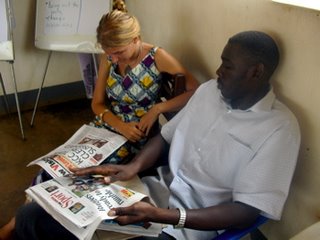
We all follow carefully the daily developments in newspapers that unreliably print shadows of truth. We listen to Kony and Otti on the radio. They both apologized “for everything” on two different days within the past weeks on an Acholi broadcast. And I dared to be thrilled at such watershed statements. At the same time, their voices sounded hollow and the words echoed off of so many atrocities. If they were sorry for the abductions, truly, than why do they still refuse to release the women and children?
Otti has said his “wife and children” are part of him and they will all go home together. The women and children are a shield, a bargaining chip, they are still useful—and they are evidence that though they might be “sorry” they aren’t willing to make things right, not yet.
The irony of having men who have committed some of the worst crimes against humanity raising issues that are actually of legitimate concern and are real political grievances of people in the North is sometimes overwhelming and borders on the absurd. A cartoon in the paper depicted new seats being added to Parliament and Kony sat in one of them with a bloodied machete. A nameplate on the table in front of him read: “Minister of Child Rights.”
I read an editorial this morning (by Charles Onyango-Obbo in the Daily Monitor) He says, “If you ask those of us, who support dialogue to end suffering, but are opposed to these pacts with the devil, what creative alternative there is to that, we don’t have an intelligent answer. That’s the real tragedy of Uganda.” I join him, and many others in the fear that, “sleeping with the devil” could produce some very ugly children.
When I passed through Gulu on the way home from Kitgum on Friday I had a drink with the Public Relations Officer for the UPDF in Northern Uganda. I got the party line, or the military line, instead of the medias interpretation of it. He told me the meeting went well with Dominic Ongwen, (one of the ICC indicted) he said Kony was lying when he said they’d been shot at after the cease-fire by the UPDF. He told me about the one abduction that has taken place since the cease-fire. I asked him if he was hopeful about peace. “Honestly,” he said, “It’s hard to tell, I say it’s still a fifty/fifty chance.” I’ve talked with him before—it’s his job to put the best foot of the military forward, and he does it well. So, I was disheartened by his prediction, if he says fifty/fifty, I’m guessing the UPDF is thinking and planning for thirty / seventy—or worse.
Still, hope finds ways of asserting itself. While we were in Kitgum there were hundreds of rebels walking, sitting under mango trees, waiting for others to join them and then continuing. Presumably they were going to the assembly points. They weren’t hostile. They weren’t causing trouble. They were “friendly.” I don’t know whether to let myself get excited or not. It is so delicate, fragile, and precarious. There are so many variables and so many unknowns.
Right now, Angelina, the Chairperson for CPA is moving with a team of others on a National Reconciliation team. The team is meeting with leaders all over the country and while they discuss and reconcile with each other they are gathering consensus around the messages they want to send to the government, the UPDF, and the LRA and to ordinary people in Uganda. She consulted me just before she left on the most recent leg of her journey to Bunyoro. We discussed the dangers of “unconditional forgiveness,” that can encourage impunity and conceal the truth. We discussed the need to convince the ICC that the crimes which have been committed against humanity—not only the people of Uganda--could somehow be redressed in a local context, in the interests of peace, through Roco Wot and Mato Oput. Angelina is admirably reckless with her optimism. While it strengthens my heart, my mind finds some safety in skepticism that guards me against the disappointment that may come.
Cautious optimism characterizes the mood around the peace process for Northern Uganda. That is how I feel anyway. In general, I consider myself a naturally hopeful person, but I want it so desperately for this place that it hurts to allow hope too much liberty—the obstacles to any meaningful peace mean a high risk of disappointment.

We all follow carefully the daily developments in newspapers that unreliably print shadows of truth. We listen to Kony and Otti on the radio. They both apologized “for everything” on two different days within the past weeks on an Acholi broadcast. And I dared to be thrilled at such watershed statements. At the same time, their voices sounded hollow and the words echoed off of so many atrocities. If they were sorry for the abductions, truly, than why do they still refuse to release the women and children?
Otti has said his “wife and children” are part of him and they will all go home together. The women and children are a shield, a bargaining chip, they are still useful—and they are evidence that though they might be “sorry” they aren’t willing to make things right, not yet.
The irony of having men who have committed some of the worst crimes against humanity raising issues that are actually of legitimate concern and are real political grievances of people in the North is sometimes overwhelming and borders on the absurd. A cartoon in the paper depicted new seats being added to Parliament and Kony sat in one of them with a bloodied machete. A nameplate on the table in front of him read: “Minister of Child Rights.”
I read an editorial this morning (by Charles Onyango-Obbo in the Daily Monitor) He says, “If you ask those of us, who support dialogue to end suffering, but are opposed to these pacts with the devil, what creative alternative there is to that, we don’t have an intelligent answer. That’s the real tragedy of Uganda.” I join him, and many others in the fear that, “sleeping with the devil” could produce some very ugly children.
When I passed through Gulu on the way home from Kitgum on Friday I had a drink with the Public Relations Officer for the UPDF in Northern Uganda. I got the party line, or the military line, instead of the medias interpretation of it. He told me the meeting went well with Dominic Ongwen, (one of the ICC indicted) he said Kony was lying when he said they’d been shot at after the cease-fire by the UPDF. He told me about the one abduction that has taken place since the cease-fire. I asked him if he was hopeful about peace. “Honestly,” he said, “It’s hard to tell, I say it’s still a fifty/fifty chance.” I’ve talked with him before—it’s his job to put the best foot of the military forward, and he does it well. So, I was disheartened by his prediction, if he says fifty/fifty, I’m guessing the UPDF is thinking and planning for thirty / seventy—or worse.
Still, hope finds ways of asserting itself. While we were in Kitgum there were hundreds of rebels walking, sitting under mango trees, waiting for others to join them and then continuing. Presumably they were going to the assembly points. They weren’t hostile. They weren’t causing trouble. They were “friendly.” I don’t know whether to let myself get excited or not. It is so delicate, fragile, and precarious. There are so many variables and so many unknowns.
Right now, Angelina, the Chairperson for CPA is moving with a team of others on a National Reconciliation team. The team is meeting with leaders all over the country and while they discuss and reconcile with each other they are gathering consensus around the messages they want to send to the government, the UPDF, and the LRA and to ordinary people in Uganda. She consulted me just before she left on the most recent leg of her journey to Bunyoro. We discussed the dangers of “unconditional forgiveness,” that can encourage impunity and conceal the truth. We discussed the need to convince the ICC that the crimes which have been committed against humanity—not only the people of Uganda--could somehow be redressed in a local context, in the interests of peace, through Roco Wot and Mato Oput. Angelina is admirably reckless with her optimism. While it strengthens my heart, my mind finds some safety in skepticism that guards me against the disappointment that may come.
Monday, February 27, 2006
Protected Villages
by: Holly
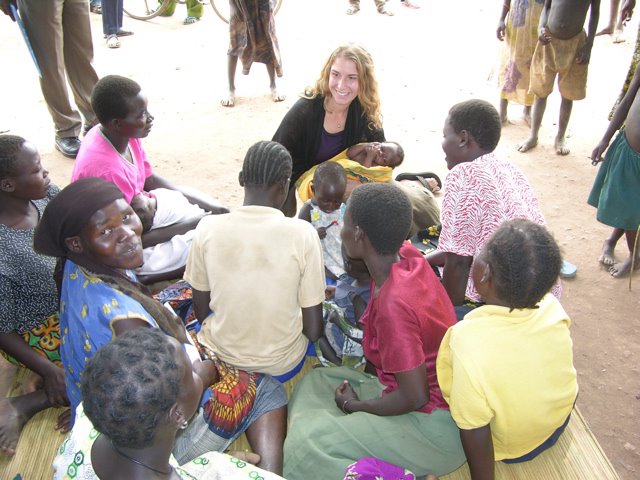
Last week I spent time in 4 different Internally Displaced People (IDP) Camps. There are some who prefer to call them “Protected Villages.” The label is grossly inaccurate and derides the suffering of the people who live there. It implies permanence—which may be what is intended by those who use it, but is not accepted by anyone who lives there. They want to go home. On the way to the camps I drove over bumpy roads with abandoned fertile fields that fed thousands of hungry mouths before the war. My colleague, himself displaced, as 94% of all those who live in Gulu are, pointed to a mango tree and then another and said, “You see, wherever you see a mango tree, that is the place where peoples homes used to be.” There are no villages in Gulu. There is only Gulu town and 53 IDP camps. The residents must be within the camp between 4:30 and 6:00 every evening depending on the camp and a strict curfew is enforced. After that the roads will be blocked and any patrolling UPDF might mistake the resident for a rebel. The same applies if they venture further than 3 km from their camp to “dig” the fields. I spent time with CPAs parent groups, youth groups, child mothers who were formerly abducted, camp leaders, elders, and others.

One of these women described how they sometimes become so discouraged that they want to commit suicide. Then they come to their friends in the Parent Support Group and they remind each other that their children need to find them alive when they finally come out of the bush. They have to persevere. They can’t give up. They have to hang on to hope.
One woman said that she passed by a center for formerly abducted children the other day and there were three kids who were just arriving having just been rescued from the LRA. And she wept. She said, “It gave me courage, to see them, it means that there are still children returning and that next time it might even be my son coming home to me.”
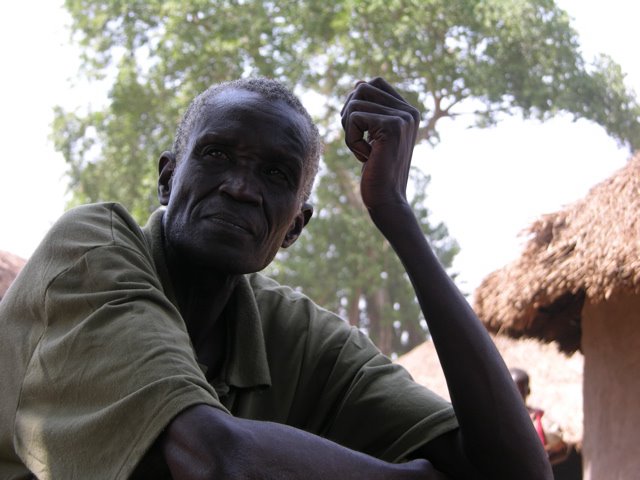
This man just learned that he is a grandfather. His granddaughter was born in the bush and was rescued two weeks ago by the Ugandan army. His son was abducted ten years ago and is still in the bush. Now he and his wife will raise the granddaughter and hope that someday her parents will come home. I asked him what he would say to his president if he could have lunch with him. He said, “I would tell him two things. First, I would ask him to stop using guns—use dialogue. The gun does not select. Our children will die without even knowing what they are dying for. They are dying for nothing. Second I would ask for an extension of Amnesty. It should be open.” Amnesty has been offered to combatants who surrender but it is due to expire in March next month. Anyone surrendering after that date could ostensibly be prosecuted regardless of the circumstances of their “enlistment” in the LRA.

I asked this man the same question. Tired, he said, “I just want to go home.”
During a conversation with one of the camp leaders he pressed his heart and admitted the thing that weighs on him and other elders the most is the youth. “We have many concerns I could tell you, but more than anything we are worried for his coming generation. This is no way to grow up. All of our cultural values are being lost. The ways that we used to pass them on to the young we cannot do here in the camp. It is all disintegrating. And when we look at them we worry for the future.” I asked him what he as a camp leader is doing to meet that challenge. He said that they the main thing he would like to do is to encourage some of the traditional ways of passing on cultural values like the “Wango” a gathering of the clan around a fire at night for the elders to tell stories, for debates, for dancing, for the young to ask the old their questions, for the life of the clan. The curfew is prohibitive of doing things in just the same way—wango should be after dark when everyone is required to be in their huts. He is waiting and hoping for a government decision to provide security and an exception to curfew.
Tuesday, February 14, 2006
News Flash...
This morning Ben and I were watching BBC and sipping on instant coffee at our hotel here in Gulu. Across the bottom of the screen it read 'Ugandan elections unlikely to be free and fair--U.S. based Human Rights Watch reports.' They catch on quick. Check it out: http://www.hrw.org/english/docs/2006/02/13/uganda12669.htm
Elections are in a week and we're praying, hoping and working for peace.
Elections are in a week and we're praying, hoping and working for peace.
Subscribe to:
Posts (Atom)