Showing posts with label the war. Show all posts

Monday, July 14, 2008

15 Minutes or Never

Mom and dad visited a couple of weeks ago. We took them to Kampala and booked rooms, but there was some mix-up and their room was not self-contained room. Wanting to make my parents feel comfortable in my Ugandan home, I tried to convince the lady who ran the place to give them a room with an en-suite bathroom. There was an empty room but it needed some cleanup, so I asked when it could be ready. Her reply: "15 minutes"...long pause, "or...never."

With all the momentum behind the Juba Peace Process--the plan to negotiate the last item on the agenda and have all parties sign within a few short days in April--it seemed like it was all going to happen, in perhaps the same time frame as my parents' room. 15 minutes...or never.

The first time we really expected/hoped/doubted that Kony would sign the final peace agreement (April 10th) I was on Ssese Island for the CPA staff induction. I sat with Immaculate, Sylvia and Tonny on the edge of the water and we watched the sun set while we listened to the day's news on radio. In this case, no news was bad news. If the peace agreement had been signed, something would have been reported. But it got darker and still the announcer said nothing about what we hoped to hear.

While peace delays, our days have been full. We finally had some time in an Acholi village--something we've planned to do for a long time. We spent a week in grass thatch hut. We were hosted by a Parent Support Group that we've interacted with a lot over the past years. Ben spent time in the garden with the men, constructed a chicken house and swept the compound.

As much as possible, I wanted to do what a traditional Acholi woman would do. I woke up each morning and swept and mopped the hut and then carried water from the well (on my head) and prepared the water for Ben to bathe. I had to take a break from feminist practice in order to really experience tradition. I practiced Acholi and listened to countless stories of village gossip, usually involving someone allegedly stepping on charms, speculation about who was charming who, etc. I wanted to learn Acholi cooking, so every day I went to a different household to make lunch and dinner. That meant twice a day of collecting food from the garden, pounding sesame or ground nuts, then grinding, cooking, serving, kneeling for washing hands before eating. All the pounding, grinding and cooking takes place in kitchens that have charcoal fires and virtually no ventilation. After the first day, my back ached, my eyes burned and my hands were covered in blisters. Because of the novelty of it, and because my effort was so appreciated--it somehow retained an element of fun. Were I born in that village, and the work was all I knew and it was as thankless as it is for most of the women, it would not have been fun. It is tough being an Acholi woman. And they are tough.

After supper, the drums come out and there is dancing for those with any sweat left in their bodies.

One evening after we danced we sat around a fire and told stories. It felt like any typical campfire, and they told stories with an easiness in their voices. The ensuing laughter would have given the impression to anyone that subject matter was light. But they were all stories of war, encounters with rebels, nights spent lying in maize fields shivering in terror in hope of escaping being burnt in their huts. They could laugh, because they felt safe. They felt like what the recalled was behind them. The unspoken claim was, "It's over." One of the women my age turned to me and said, "I've never known anything like peace in my life." I held her hand, and hoped that it really was over, and that she would know peace now. It is all so fragile, maybe deceptive--this fake or fragile peace we're enjoying in northern Uganda.

It was wonderful to spend time with my parents when they visited. We shared a taste of life in Lira, work in Gulu, Philip's traditional marriage in Kampala and a game drive and relaxing at the lodge in Murchison. My favorite animal is the giraffe.

We thought we'd miss the big cats. The grass was so tall, my dad said, "they could be 15 feet away and we wouldn't even know it." At that moment we saw this one, a baby, even less than 15 feet away. It's mother woke up and another cub emerged and the threesome ran off.

Mom and jelly bonded.

We finished our time with them dropping them off for a conference they had in Jinja. An hour before they had to arrive dad suggested bungee jumping. I've never had any desire to do it (I don't like the sensation of my heart being in my throat), so mom and I watched Ben and dad leap off a huge tower at Bujagali falls down to the Nile below them. I think we were more scared than they were.

I can hardly believe how soon we will be leaving for London. In periods of transition time takes on a curious character. The days somehow seem longer, but the months fly. I find myself in the middle of a tension, straining toward what's ahead and dissolving into nostalgia/regret on what's past. I find equilibrium in the middle of that tension. I manage to be fully present. In those moments every conversation has it's own life and meaning and each encounter is accepted and appreciated for what it is. It's often humbling. Sometimes, my expectations far exceed the reality and I wish for more. Usually, I feel grateful.

Saturday, March 29, 2008

The Night Peace Came

by Holly
A couple of weeks ago Ben and I got a text message from someone in Kampala who’d seen a news report celebrating the end to war in northern Uganda and guessing that there was some serious jubilation where we were. There was indeed jubilation, but it was because of the annual Lira NGO volleyball tournament, a beautiful starry evening, good music and good company. We started asking friends if they’d heard the news—most hadn’t and the few that had shrugged indifferently. They commented about how divorced the peace talks were to life of grassroots people, or about what a farce the entire process had become since the link between the LRA negotiators and the LRA fighters seems increasingly dubious. Could it be, I asked with a mix of incredulity and hope, that we will remember tonight as the night peace came?

No. Partly, because what was signed that night was an agenda item of the ongoing peace talks and not the comprehensive peace agreement, and partly, because peace doesn’t come all at once. It’s an agonizingly slow process that is benchmarked with agreements but must extend beyond signed pieces of paper. We might remember it as an event, a day, a night, but it will be a long journey.

The formal peace process in Juba is moving forward right now with ambitious momentum. The final peace agreement was scheduled to be signed this Friday (March 29), but this morning’s papers (New Vision & Monitor) say it’s been postponed until next week, April 3rd. Before the signing, the negotiating teams from government and LRA together with a delegation of about 100 civil society leaders including Angelina, CPA’s Chair, should agree on an implementation schedule and framework. They intend to travel to present it to the LRA leadership in Ri-Kwangba, and return with either Kony or his delegate to sign on his behalf in Juba next Friday. Easter Monday, before Angelina went to Juba, she told us her goal would be to push for the two ‘big men” to sign the agreement with their own hands. I admire her determined optimism, but it’s hard to imagine that either of them will be holding pens in the same room in the near future.

Most of my colleagues don’t believe Kony will ever come out. Perhaps he won’t block the peace accord, but he won’t be part of it. He realizes that many of his ranks and the affected community want peace, but he and a few others have no intention to ever return. That idea somehow is not unsettling to many I’ve talked with. They believe that Kony and company will either become mercenaries for the highest bidder in DRC, CAR, Sudan or Chad or that there are already plans of apprehending them as soon as the agreement is signed (no one says this outright, they just hint around it as if speaking plainly might jeopardize some covert operation). Someone put it this way, “this peace agreement affects almost everyone and we all want it. The ICC is just for three people, the peace agreement doesn’t need to be for those three people too.”

I’ve been surprised by how little concern has been raised over the implications of the reports in the past couple of weeks of 100 new LRA abductions in the Central African Republic and 70 more in south Sudan. Maybe that’s due to the amount of unreliable information we get. Though many people seem to have an as-long-as-it’s-not-in-Uganda attitude. Of course there have always been and will continue to be doomsayers. They have warned the delegation of 100 civil society leaders of the risk of going to Ri-Kwangba this week. They fear that some apocalyptic fate may await them, or they will be captured and held ransom with expected demands to be made to the ICC.

From the beginning LRA top command has made it clear that the ICC issue is a deal breaker. Yet few people I talk to here think that the issue will have any bearing on the outcome of this week’s discussions. It’s not clear to me yet if this is a hope that international law will suddenly become “flexible,” wishful thinking about the trust that’s been built between the government and LRA leadership or something else. One friend suggested, “make it as easy as possible for him (Kony) to sign the agreement and then just disappear." Perhaps that's what the organizers have in mind. Maybe we are boldly moving forward ignoring the impending collapse of the process. Or, could there be some quiet plan to take 3 people out of the equation all the while making public statements that make impunity-conscious human rights folks squirm?

What is actually happening is hard to say. In any case, notwithstanding further postponements, the next 7 days of events may determine which night we will remember as the night peace came to northern Uganda.

Sunday, November 18, 2007

LRA consultations/speeches in Lira

Holly and I just returned from a public meeting between the citizens of Lira and a delegation from the LRA. As a part of the third agenda item in the Juba peace talks, the Government of Uganda and the LRA have been visiting northern districts to gather opinions of the people affected by this 20 year war. Several weeks ago the government of Uganda held consultations; today it was the LRA’s turn.

There is no statement that can capture the views of affected people. Their questions and statements directed to the delegation ranged from, “How can we be compensated? “Our schools, economy, and social fabric have been destroyed” to “We forgive them, but the ICC [International Criminal Court] should keep the pressure” to “Why do we need the ICC when we have our own court in Kampala?” to “Is Otti [2nd in command of LRA] dead or alive?” to “You have a cell phone and a vehicle, are you going to pay our children’s school fees?” to “How can you come and ask for forgiveness when you are keeping our children in the bush? You should release our children as a sign that you’re serious about reconciliation,” to “If the LRA wants to fight the government then why have they been killing and mutilating citizens?”

The delegation (perhaps strategically) waited until the sun went down to even take these questions/statements and was unable to answer them due to time constraints.

However, the LRA delegation made a clear apology and claimed commitment to reconcile. At one point they equated Joseph Kony with the main character of Jesus’ parable, “The Prodigal Son”, saying, “We have made mistakes, all we want to do is come home and work alongside the workers in the field.” They pleaded with community to be the father in the story, who welcomed his wayward son home.

Naturally, the delegation emphasized the Government’s culpability in the displacement, atrocities and poor governance.

Thursday, October 11, 2007

Accountability & the Whistle Blower

by Holly

Part of the Steps Toward Reconciliation project that CPA is doing (more in “it is possible) is a survey. It takes a couple of weeks in each district, so I’ve just visited each place for one of the days to see how it’s going and hopefully give some useful guidance. Without all the data in and analyzed, I made some anecdotal observations. Like formerly abucted girls tended to be bitter with the government for their failure to protect them as well as with the LRA, whereas the returned boys mostly blame the government for what they’ve suffered. Something I want to interrogate further is the concept of “accountability” in population surveys. Talking with my CPA colleagues conducting the survey, I noted how especially in focus groups with kids, someone will say in one breath that the LRA and the government/UPDF should be held accountable for what they’ve done and that everything should be forgiven for the sake of peace and there should be amnesty. So I asked, what I thought were obvious questions, “are they confused? do they feel they are obliged to answer in one way but then say how they really feel? Why such contradictory answers by the same people?” But then I realized the contradiction may be a cultural construct of accountability in me (and I think probably many other western people involved in population surveys). Yes there should be accountability. Yes, there should be amnesty. My colleagues told me to listen closer to the explanations of accountability. What I heard--they want compensation and restitution. Exactly what form differed, some actually think 7 cows should be given for each life lost or to every family in northern Uganda, and others want the destroyed churches and schools to be rebuilt and free education. But accountability explanations that I heard from kids (again, anecdotal, I don't’ have all the data yet) didn’t include judicial processes. The adults varied more, some said, “take them all to court!” one woman threatened to cut off the ears of Musevini and Kony, and many had similar views as the children. Some said they were ready to forgive everything unconditionally as a moral and spiritual choice, and others said forgiveness will happen only when all those killed are brought back from the dead.

I listened to a lot of stories. Sometimes what I hear is just so broken—so out of the frame of reference of my own understanding for human interaction, that regardless of how many times I hear the stories and see the faces it doesn’t become normal-- it still shocks the conscience. One boy in a children’s focus group stood out to me even before we started talking. We had individual interviews afterwards with formerly abducted children so we talked with him more though he was very open even with the other children. He was tiny, with big thoughtful eyes, and a ready smile. In his brightly colored thread bare school uniform I would’ve guessed he was no older than 9 but he’s 12. He was abducted when he was 7 and in the LRA for a year. He’s doing well now, he has no nightmares and feels he’s been cleansed from the past but he wishes he could be forgiven by the people he killed. He wasn’t given a gun, but he said, “what I did was worse, I killed indirectly. They gave me a whistle and I had to blow it when I saw someone trying to escape. I always wondered, if I took the risk and didn’t blow the whistle, maybe I could’ve made them believe that I didn’t see the person and they would still be alive. But I was afraid they wouldn’t believe me and I’d be killed, but I know it was wrong to blow the whistle. I killed so many people.” When he talked of forgiveness from the families, he said, “Is it really possible? Wouldn’t they just be angry and kill me?” I want to find out. He has taken on so much guilt and it is too heavy a burden for this child to bear. He needs to hear that he is not blamed and he’s forgiven. Is it really possible? What if an elder in the community where he fearfully blew the whistle could meet him and release him from the guilt he’s carrying? Maybe it’s possible for him to grow up with a lighter load on his shoulders.

There are so many children like him. A travesty of the re-integration process is that talking about the past or remembering it is often discouraged which risks that the pain and guilt inspired by crimes they participated in (forced or with some level of real or perceived agency) is downplayed. Maybe a “way forward” is to make safe spaces for kids like this to tell their stories and be shown mercy.

Sunday, January 14, 2007

Soft

by Holly
When we got to my parents house this is what I saw when I walked in. I cried. I wasn’t sure why. It just looked so soft and beautiful and it felt like it was exactly the shape of the hole in my heart. It was one of those moments where you get a glimpse of the way life or home is supposed to be and most of the time it isn’t where we live. Where we live isn’t even a shadow of what should be. Maybe that’s true everywhere but in northern Uganda it feels particularly true. That’s not to say that everyone here should have a living room like the Randall family cottage but I do think that we all long for something that is there--comfort, beauty, a loving family that actually likes and looks forward to time together and is restored by it, shelter, safety, more than enough to eat, acceptance.
It broke my heart. Partly, because I miss it and partly because it seems impossible for the people of northern Uganda. And then at the same time those moments happen here too. Some are quiet and simple and others are more profound. I had a simple one yesterday when I walked home under a red sun after a meeting with the management team that was energized and full of common purpose. And then Ben and I sat on the front porch and watched the sun sink and talked about the day. I had a moment like that last year when I first saw Acholis dance. While they sweat and kicked up the red dust to the drums I thought, “this is what they were meant to do, this is how it’s supposed to be with the young people dancing and the children trying from the sides and the old people nodding and watching—they weren’t meant for this war, destruction, displacement and poverty.” But that moment happened right in the middle of it. In a way that’s comforting, because it means that whatever those moments are or whatever they reflect—the longing for home—the restoration of things to the way they should be—life at its fullest—they are more powerful and can’t be overcome by the most gruesome war, or by massive displacement or abject poverty. Human beings will still dance.

Saturday, November 04, 2006

How to Bend a Speer


I’ve found it surprisingly challenging to reconcile hope with critical thinking about current events. I told Ben earlier in the week (on our date night, which we do every week and it’s so great!) that I was having this struggle and as we talked about the dynamic of hope the thought occurred to us that perhaps it was so hard to reconcile the desire not to blindly wait for something that was not going to happen and not giving up on it because we had a wrong view of hope. Maybe hope isn’t convincing yourself to think that something good is actually the most probable outcome, but believing that it should happen and that the good thing you hope for is closer to what God intended—closer to original design. With this little shift in my thinking it’s been easier to reconcile my mind and heart while I achingly long for peace in Uganda and reason through the complexity of the ongoing peace process. People want it so much, I want it so much. The emotional investment in this process is deep. You can see it on people’s faces. After 20 years, God, let this be the end—if not now when? When you talk to most people and ask them about what they think about the process the answers are on the tip of every tongue “I just want to go home,” or “I just want my sister to come back from the bush, that’s all I want.” I’m often humbled and baffled by the unflinching hope that many in the north express—but I do wonder, everyone has their breaking point, if this process fails will they reach it?

I spent most of this week with a delegation from MCCs advocacy offices from DC, Ottawa, and the UN office in New York as well as from the Africa and Peace departments in Akron. It was refreshing to be with them, to experience Uganda with them, and to discuss how we can better support the peace process through advocacy. We had a series of meetings with people from the groups of cultural and religious leaders who have been supporting/observing, military, NGO community, people in IDP camps, people on the monitoring team for the cessation of hostilities agreement, observers of the process from Juba, and others. The views they had, the messages they wanted to send were diverse, and rather than give my own ideas I thought I’d capture a few from what I heard: (paraphrased)

Why is the international community silent? The West is too silent, not showing oneness with Africa. If this conflict was happening somewhere else there would have been more support from the US. (Religious leader)

The incidences of violence around Juba reported in the media are not UPDF and LRA. Most incidences that have taken place have been the result of misinformation. (Monitoring team member)

I think that the government is trying to save face and that the LRA are rebuilding. There is a lack of commitment to relieve the suffering of Acholi people on both sides. They need to build confidence: don’t discuss wounds, don’t praise yourself, the negotiation should include the suffering people because they are motivated to work for peace. Maybe the negotiating teams should visit a camp so that they can get motivated (community leader)

Are you really sure that peace and justice are friends? Who is the parent in this conflict? Parents take all the costs of their children’s misbehavior. Convince the ICC to bend the rules. (Community leader)

What’s needed for peace is restorative justice. This is not a tribal war but crimes against humanity by terrorists. The military method hasn’t succeeded for 20 years. This might work. It is the most hope we’ve had. In the past the LRA wouldn’t eat food provided by the government of Uganda. But now they are accepting food, so there is some trust. (Formerly abducted person)

We want a statement from the Secretary General of the United Nations not only Jan Egeland. Now the Secretary General is leaving, I hope the next one will at least say something. (Religious leader)

Why is Kony so difficult to capture? We have a saying in Acholi, a coward lives longer. But the fighters are there in the bush, for them this is about reorganization. The LRA negotiating team are people who have a power hangover and they are not fighters. They are waiting for it to fail and getting attention and money. If you think I’m lying time will tell. (Military)

Why is Kony so difficult to capture? Because he is surrounded by children. Children are his water. (Community leader)

When I met with Kony, he had 3 messages: 1. He is for peace. 2. Watch and witness who will spoil the process. 3. The suffering should stop and the war should end. He is willing to do Mato Oput (reconciliation ceremony, that means drinking bitter herb) with the community but is not sure how it could be done with the government, since the government is not a tribe. (religious leader)

What specific confidence building measures are needed? UN supportive statements and a visit from the Secretary General to Northern Uganda. The African Union to respond to the call to be on the monitoring team. “Tell off” the government of Uganda to withdraw all troops in Sudan. Media should send positive supportive messages. It should not be a hurried process—there is no hurry in Africa—we need community views and this takes time. LRA needs to listen to the community. Focus on the victims and the costs of more war. (group of cultural and religious leaders)


These all are not exact quotes, but they are the things I remember and scribbled down in my notebook while I listened to people. Someone said, knowledge speaks, and wisdom listens. Trying to be wise, I’m listening--to those who may have accurate information or may be confused and misinformed but who all have a reason behind their words. I have many questions, but one is at the forefront of my mind. In any negotiation, a party’s position is strengthened when their alternative to a negotiated agreement is good. Unfortunately, all the parties have pretty decent alternatives, which may be why we've seen so many walk-outs. As I see it, the degree to which those alternatives are weakened motivation to settle without violence will be strengthened. How do the Juba peace talks become the most attractive option, and how can the alternatives to a negotiated agreement be minimized?

Wednesday, September 13, 2006

Hopeful Skeptic

by Holly

Cautious optimism characterizes the mood around the peace process for Northern Uganda. That is how I feel anyway. In general, I consider myself a naturally hopeful person, but I want it so desperately for this place that it hurts to allow hope too much liberty—the obstacles to any meaningful peace mean a high risk of disappointment.

We all follow carefully the daily developments in newspapers that unreliably print shadows of truth. We listen to Kony and Otti on the radio. They both apologized “for everything” on two different days within the past weeks on an Acholi broadcast. And I dared to be thrilled at such watershed statements. At the same time, their voices sounded hollow and the words echoed off of so many atrocities. If they were sorry for the abductions, truly, than why do they still refuse to release the women and children?

Otti has said his “wife and children” are part of him and they will all go home together. The women and children are a shield, a bargaining chip, they are still useful—and they are evidence that though they might be “sorry” they aren’t willing to make things right, not yet.

The irony of having men who have committed some of the worst crimes against humanity raising issues that are actually of legitimate concern and are real political grievances of people in the North is sometimes overwhelming and borders on the absurd. A cartoon in the paper depicted new seats being added to Parliament and Kony sat in one of them with a bloodied machete. A nameplate on the table in front of him read: “Minister of Child Rights.”

I read an editorial this morning (by Charles Onyango-Obbo in the Daily Monitor) He says, “If you ask those of us, who support dialogue to end suffering, but are opposed to these pacts with the devil, what creative alternative there is to that, we don’t have an intelligent answer. That’s the real tragedy of Uganda.” I join him, and many others in the fear that, “sleeping with the devil” could produce some very ugly children.

When I passed through Gulu on the way home from Kitgum on Friday I had a drink with the Public Relations Officer for the UPDF in Northern Uganda. I got the party line, or the military line, instead of the medias interpretation of it. He told me the meeting went well with Dominic Ongwen, (one of the ICC indicted) he said Kony was lying when he said they’d been shot at after the cease-fire by the UPDF. He told me about the one abduction that has taken place since the cease-fire. I asked him if he was hopeful about peace. “Honestly,” he said, “It’s hard to tell, I say it’s still a fifty/fifty chance.” I’ve talked with him before—it’s his job to put the best foot of the military forward, and he does it well. So, I was disheartened by his prediction, if he says fifty/fifty, I’m guessing the UPDF is thinking and planning for thirty / seventy—or worse.

Still, hope finds ways of asserting itself. While we were in Kitgum there were hundreds of rebels walking, sitting under mango trees, waiting for others to join them and then continuing. Presumably they were going to the assembly points. They weren’t hostile. They weren’t causing trouble. They were “friendly.” I don’t know whether to let myself get excited or not. It is so delicate, fragile, and precarious. There are so many variables and so many unknowns.

Right now, Angelina, the Chairperson for CPA is moving with a team of others on a National Reconciliation team. The team is meeting with leaders all over the country and while they discuss and reconcile with each other they are gathering consensus around the messages they want to send to the government, the UPDF, and the LRA and to ordinary people in Uganda. She consulted me just before she left on the most recent leg of her journey to Bunyoro. We discussed the dangers of “unconditional forgiveness,” that can encourage impunity and conceal the truth. We discussed the need to convince the ICC that the crimes which have been committed against humanity—not only the people of Uganda--could somehow be redressed in a local context, in the interests of peace, through Roco Wot and Mato Oput. Angelina is admirably reckless with her optimism. While it strengthens my heart, my mind finds some safety in skepticism that guards me against the disappointment that may come.

Tuesday, April 04, 2006

Life In Captivity of the LRA


by: Dan

Dan is a dear friend who wanted to share his story. I (Holly) also wrote about him in an archived blog "Man Was Made to Broken". Lately we've been enjoying the rainy season with Dan as he's an awesome local gardening guide and we spend whatever daylight is left after the workday getting our hands dirty together. Yesterday we took some time out from "being farmers" to write Dan's story.

"This story is narrated by my own life experience, Dan Feego Omara Obua. I am one of the lucky survivors who escaped from the captivity of the Lord’s Resistance Army based in Northern Uganda.

When yet a child, I never imagined that I would be taken captive. Nonetheless, I was the first to have that experience in my village. Captivity is a situation in which a person lives without rights and without freedom in so many ways, a situation between death and life imposed on innocent people, young children, and foreign citizens who live and travel around the northern parts of Uganda.

According to my memory, on Sunday the 27th November, 2003 at exactly 3:17 in the afternoon, the weather was very cold and dry with total silence around our living environment. In our tradition, we believe the weather can try to tell you something before it happens. This day was unlike the other previous days but no one thought about the indication of the weather. Two hours previously, a well known “madman” by the name Yagayaga Sarapino Odero who always built his house and set it ablaze himself, made a loud ululation calling for people’s help. Very many people were scared because there had been rumors spreading about the rebels in the morning. To some people like me, I thought when he was yelling, he was just making his daily madness just to scare people. I found out later that it was true that it was the rebels beating his legs and elbows.

On that evening I and my younger brother Calvin were playing football at my first primary school, Iwal Primary 7 School. The rebels surrounded the field without our notice and captured us under the command of Ocan Bunia, called “Boxer.” They surrounded the field and entered inside. They told us to sit down at gunpoint and they tied us with rope in one single line and we started to go.

On our journey to Southern Sudan, we detoured places like Aloi in Lira district, Omot in Pader district, and Acek Ocot in Kitgum district where we had “training camp.” During this time many people lost their lives during training, especially those who were grouped to be trained as “Protective Mission Unit” like me, because of the heavy and deadly training where the trainees were forced to jump from a distance of 40-50 meters high to the ground level. They put the rope on the summit of a mountain and tie it to the other side of a cliff. You climb up there holding the rope and try to slide while holding the rope and then jump down from there. If you jump, like me, I jumped from there and I got a sprain in my knee and I couldn’t run so they came and grabbed me and took me for treatment. Other people who broke their legs or died were taken and buried. This had been done or commanded by an Egyptian commando fighter, Abdullah Omar, doing his contract with the LRA leader, Joseph Kony. Under his command, during the training people who are Muslim were the ones to be trained first, and then after they were given Muslim gowns for praying. While training other people, Muslims do prayers and bury the dead. Besides that, other people lost their lives during other “competitions” like laughing, crying and wrestling. They always do it in the evening where the rebels are going to sleep for that day. They choose a good number of people between five and eight to compete with laughing. They come in front and stand and then you wait for the order. If they say start you start laughing. After that they stop you and they have a judge to tell who laughed most. They choose three people, first, second and third place winners, the rest should be killed. The losers were cut into pieces and eaten by the trainees. Why do they do it like that? If they are going to sleep somewhere they have to kill people. It is an order from Kony. Kony doesn’t use his own reason, he gets it from the power that comes on him. I would call it a demon. It was an order from Kony’s demon. Why the losers were cut into pieces and eaten by the trainees is because it is supposed make the trainees to be more courageous in fighting. They call that one “Entertainment Shadow.” Another way which people lost their lives was during crossfire between government forces and the rebels because of the gunshots which makes them scared and scattered, especially along the Ugandan and Sudan border where we spent four days trying to enter Sudan after many clashes.

One day along the bridge that borders Uganda and Sudan, I experienced through action the phrase, “fighting for survival.” I had to fight for survival for myself and for my brother Calvin who was only seven years old. During my childhood I “called the smoke fire.” That is a saying here that means what I had seen when I was still a child was not a “fire” or real suffering, and that fighting was more terrible than anything I’d seen in the past. When I saw the real “fire” along the bridge I realized my mistake and I remembered what my father used to tell me, that “man dies in action.” This phrase means you should not sit and wait for what is coming to kill you, but you should stand up and try to stop rather than leaving it. From there I retook my responsibility as the firstborn in our family by carrying my younger brother, Calvin, on my back and grabbed a gun from a certain rebel who was trying to kill himself after a serious injury. I took an oath by urinating into the barrel of the gun while praying, “God, I am ready to die—for what? I don’t know, but I believe you will never forsake me in this war as You said in the scripture, because I and my entire family members are innocent. Amen.” From here I and my brother survived along with nine rebels. After the fighting stopped we go for charge, that is counting the dead. Forty-one government forces were killed. Twenty-nine rebels were also killed and forty-two captives were also killed.

The situation in Southern Sudan, or Jubba, was so hard to survive. This was because of serious starvation, lack of medical equipment and personnel, serious injuries and frequent attacks by the government forces from Uganda border. After a duration of two weeks the government forces from brigade 25 waged a serious attack on our rebel camps with a helicopter gunship and mobile troop and a lot of people were killed. Other people, like me and Calvin got separated towards the Ugandan border. From here I escaped with Calvin. I started to seek the way to Uganda. We walked for four days. During this walk we were surviving by eating raw leaves and roots and we suffered dehydration because there was no water since Southern Sudan is a desert area. We had nowhere to get water for drinking except at one oasis on the way with little water. We met a patrolling unit before we reached the border. It was commanded by Okello Bony. When we met them other soldiers were so suspicious that we were real rebels but because Bony was from Lira he welcomed us, but first they put us at gunpoint and asked us our ranks because they mistook us for real rebels. I had to explain everything to them, that I was a student from Amuca Seventh Day Adventist Secondary School in Lira and we were captured from our village and taken to Southern Sudan and we managed to escape because of the attack waged by the UPDF on the rebels camp and we were trying to find our way back home. Then they welcomed us and took us to their detach along the border and transported us to Kitgum town where we were handed to Captain Okori from Lira. He put us in his office truck and brought us back to Lira. He dropped us at Ngetta dispensary to get some medical treatment and he gave us some money for transport and recovery, about $50. We went back home. People were very happy and celebrating our coming back. During the celebration they do traditional things. Old men, like my grandfather wear animal skins and carry a shield and long speer. They point it at you but don’t touch you to symbolize that no harm should come to you. They slaughter a goat and smear something on your head and pray with traditional words. Then they put two eggs on the ground and you step on them and they slaughter a baby chicken and take a piece of the stomach and smear it on your neck and pray in traditional words. They do it so that we should be cleaned from the past and not be captured again. Two weeks after that I went back to school. Very many students were questioning me because they heard that I was captured and they were not happy. They wanted to find out what life was like in captivity. I narrated everything to them. They comforted me.

After going back to school I continued with my studies until I finished secondary school. I wanted to go to University but because of the insecurity my parents cannot raise enough money to send me. I’m trying on my own to earn money to go back to school. It is still hard because there is no way to get good money. If I can manage I will study agricultural course for a beginning. Then after I’d like to go for law. My family has good acres of land and I want to use them in a way that my people can benefit. Then my dream is to be a lawyer because I feel that I can stand up and advocate for justice in my country, freedom and the welfare of humanity.

The best thing was prayers during that time because without that I don’t think I would have been able to come back after that hard life. After coming back to school I went straight to the pastor and got saved because I wanted not to commit any sins the rest of my life and because I knew that God loves me. Without that I couldn’t come out of my captivity. I know that God loves me and I love God. But I feel that what I should do to let God know that I love Him is to love His creation—especially, human beings because He created them in His image. Whoever lives around the world and thinks that they love God should show it by loving God’s creation."

Saturday, March 11, 2006

How to Fight a Dragon: Advice anyone?

by Holly
Last night I sat watching a massive lightning storm from the fourth story balcony of my hotel room. It’s the tallest building in Gulu. The electricity was out as usual but nature lit the scene better than any street lamps: women with jugs of water on their heads, large horned cows grazing in what should be a park but is a de facto rubbish dump, street kids running barefoot through it while the town closes up shop and people make their way home. While I let the view and the breeze wash over me the scenes that flashed through my mind, were of the past days in Kitgum. The faces of the children. The desperation of the mothers. The drunkenness of fathers. I hesitate to describe in too much detail, because to do so would mean I’d have to keep thinking about it and to let those images continue to burn. And right now I want it all to stop and I feel so helpless. There is a dragon going about setting fires with its poisonous lungs. And I am torn. Confront the beast with a stick, or more accurately a toothpick and try to plunge it into its heart. Or follow in its tracks crying over the fires hoping my tears might quench the flames.

Anything, anything to make this stop. To make it better. But it is so big. And they say if the war ends tomorrow there will still be no peace. I believe it. I’ve seen the social ills that will remain for generations. My thinking is evolving and I even question what I wrote last week about the ICC. If the arrests of four people could even have a chance of alleviating the deplorable suffering of the eyes I looked into than by all means, somebody send in the special ops and make the arrests. It won’t kill the dragon but maybe it would keep it from lighting more fires and we could concentrate on extinguishing the flames.

Of course my analogy depicts a more lonely scenario than the reality. There are many of us here crying over the fires and wielding our little toothpicks as best we can—we’ve got SUVs galore to prove our valiant efforts: activities in night commuter centers to keep the children busy, income generating activities for returned abductees, dances and dramas to “sensitize” the community to issues of peace, educational support to “orphans and vulnerable children,” trainings and workshops on psycho social support, conflict management and sexual and gender based violence.

How many toothpicks does it take to kill a dragon?

How many tears to make the fire stop?

Today I feel quite small. I’m supposed to advise my organization. That’s what Technical Advisors do. And while I try to think of diplomatic sensitive ways of addressing issues of governance within CPA and how to improve our policies and activities—the dragon is still at work. I make suggestions that do have a small impact, and I feel I’m able to contribute something—more than I could before I came--but it is a pittance nonetheless and leaves one feeling utterly disempowered. My toothpick is charred and the fire has dried my eyes.

Kitgum in Pictures


CPA runs 8 night commuter centers in Kitgum. I spent an evening at one of them. These kids told riddles and stories and sang songs to pass the hours between arrival at dusk and their bedtime.

This is where they sleep. There is one oil lamp (a fire hazard) to provide light for 180 people--mostly children and a few mothers. They are given a blanket and they tie up any belongings in case of flooding in the tent when it rains. The women and children under five are in one side of the tent and boys on the other.

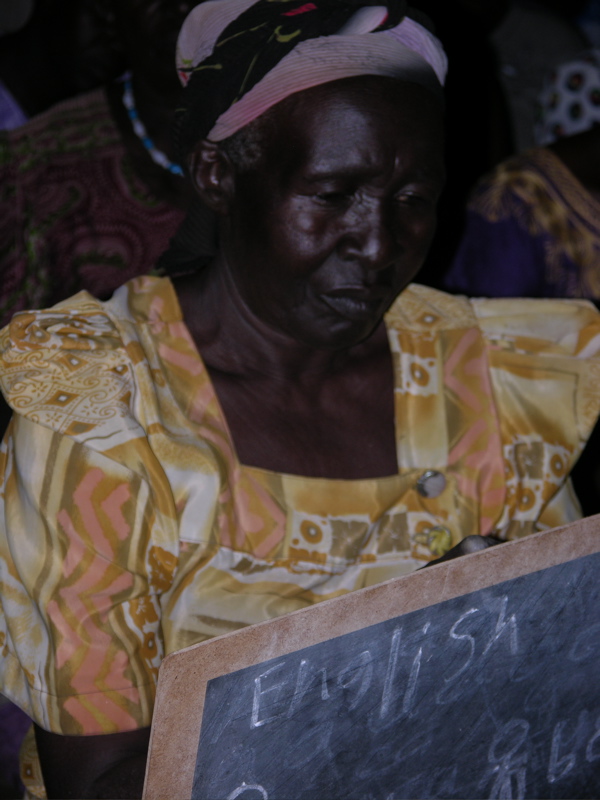
While in Kitgum I visited an MCC sponsored adult literacy program for night commuting women. This woman is in the beginning class.

The women in the adult literacy class sang a song of thanks. "Our fathers did not send us to school, but thank you, you have sent us to school. Now when we go to the bus stop we can see for ourselves, Does this bus go to Kampala or does this bus go to Gulu and how much does it cost? Now we can teach out children and have pride in our homes."

Monday, February 27, 2006

Protected Villages


by: Holly

Last week I spent time in 4 different Internally Displaced People (IDP) Camps. There are some who prefer to call them “Protected Villages.” The label is grossly inaccurate and derides the suffering of the people who live there. It implies permanence—which may be what is intended by those who use it, but is not accepted by anyone who lives there. They want to go home. On the way to the camps I drove over bumpy roads with abandoned fertile fields that fed thousands of hungry mouths before the war. My colleague, himself displaced, as 94% of all those who live in Gulu are, pointed to a mango tree and then another and said, “You see, wherever you see a mango tree, that is the place where peoples homes used to be.” There are no villages in Gulu. There is only Gulu town and 53 IDP camps. The residents must be within the camp between 4:30 and 6:00 every evening depending on the camp and a strict curfew is enforced. After that the roads will be blocked and any patrolling UPDF might mistake the resident for a rebel. The same applies if they venture further than 3 km from their camp to “dig” the fields. I spent time with CPAs parent groups, youth groups, child mothers who were formerly abducted, camp leaders, elders, and others.


One of these women described how they sometimes become so discouraged that they want to commit suicide. Then they come to their friends in the Parent Support Group and they remind each other that their children need to find them alive when they finally come out of the bush. They have to persevere. They can’t give up. They have to hang on to hope.

One woman said that she passed by a center for formerly abducted children the other day and there were three kids who were just arriving having just been rescued from the LRA. And she wept. She said, “It gave me courage, to see them, it means that there are still children returning and that next time it might even be my son coming home to me.”


This man just learned that he is a grandfather. His granddaughter was born in the bush and was rescued two weeks ago by the Ugandan army. His son was abducted ten years ago and is still in the bush. Now he and his wife will raise the granddaughter and hope that someday her parents will come home. I asked him what he would say to his president if he could have lunch with him. He said, “I would tell him two things. First, I would ask him to stop using guns—use dialogue. The gun does not select. Our children will die without even knowing what they are dying for. They are dying for nothing. Second I would ask for an extension of Amnesty. It should be open.” Amnesty has been offered to combatants who surrender but it is due to expire in March next month. Anyone surrendering after that date could ostensibly be prosecuted regardless of the circumstances of their “enlistment” in the LRA.


I asked this man the same question. Tired, he said, “I just want to go home.”

During a conversation with one of the camp leaders he pressed his heart and admitted the thing that weighs on him and other elders the most is the youth. “We have many concerns I could tell you, but more than anything we are worried for his coming generation. This is no way to grow up. All of our cultural values are being lost. The ways that we used to pass them on to the young we cannot do here in the camp. It is all disintegrating. And when we look at them we worry for the future.” I asked him what he as a camp leader is doing to meet that challenge. He said that they the main thing he would like to do is to encourage some of the traditional ways of passing on cultural values like the “Wango” a gathering of the clan around a fire at night for the elders to tell stories, for debates, for dancing, for the young to ask the old their questions, for the life of the clan. The curfew is prohibitive of doing things in just the same way—wango should be after dark when everyone is required to be in their huts. He is waiting and hoping for a government decision to provide security and an exception to curfew.

Friday, January 27, 2006

FIRE IN THE CAMPS


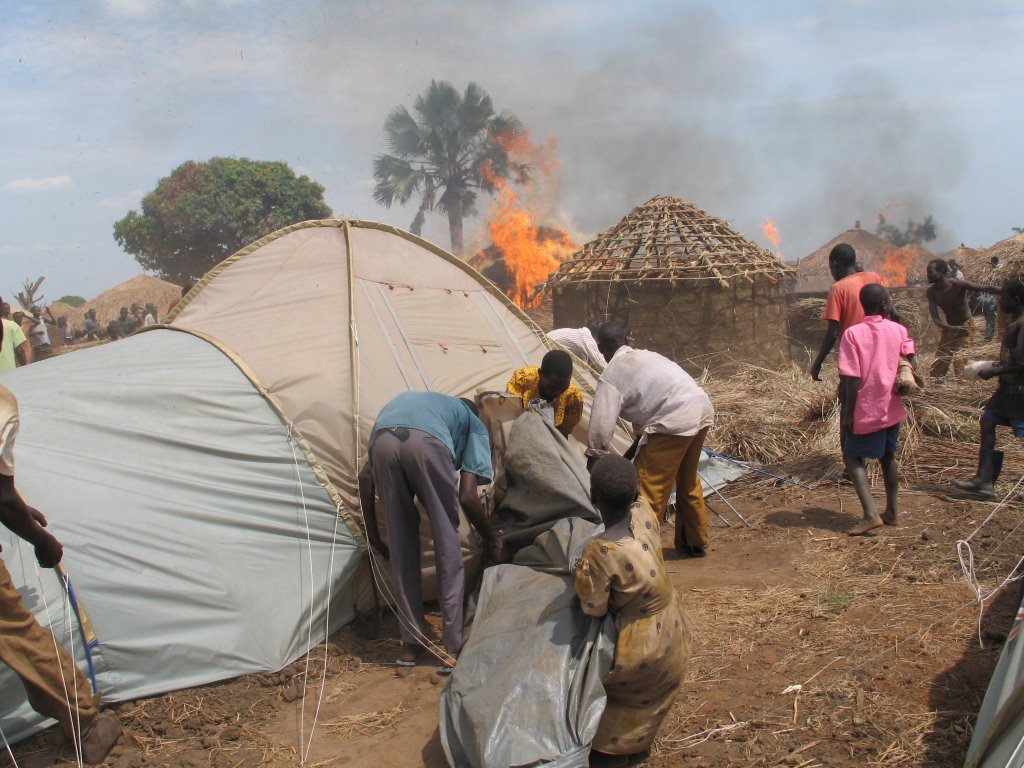
We’re in the middle of the dry season here. The intense heat, dust and wind makes the people in the IDP camps even more vulnerable. Last week there were massive fires in 4 large camps. One camp, Amoro, saw 450 grass roofs burn, resulting in the death of 3 children. A friend of mine who was there said, “You can’t imagine, even if you saw it, you couldn’t believe it”. As we discussed this issue in a United Nations Working Group on Child Protection, an INGO representative said, “This is our fault, we are to blame. We knew this was coming, and yet we’re working with the aftermath of the fires without taking the proper preventative measures. Child-headed households are cooking meals with little to no concept of how to manage a fire for cooking. Look even now, we’re reacting to the catastrophe of the fires and making no plan for preparing the camps for the rainy season-which causes even more damage and claims more lives.” Everyone can become frustrated at the circumstances here. Some NGOs blame the camp residents for setting their own homes on fire so that they can receive non-food aid from the government or INGOs. I personally have a hard time believing that, and others I’ve talked to feel as though that response is given out of sheer frustration at the immense challenge of keeping the people in the camps safe.

Wednesday, January 11, 2006

Peace is Like Glass

Officially, we started work last week. But the needs are great and I was getting restless, so before Christmas I assisted with a small part of an assessment and I learned so much. During that week I spoke with parents of young women who returned from the LRA last year. I met their daughters. Most of them were in captivity for about 8 years. I’m struggling to find the right words for my interactions with them. They may not exist—somehow I was inspired and heartbroken by the same conversations. Most of the girls who have returned came back with children. When I talked to the parents I noted that the moms seemed to have adjusted to that more easily than the dads. The dads all shared their struggle to accept and love the children that were a constant reminder of how they had failed to protect their daughters and how they had been repeatedly raped while in captivity. It's so heavy.

Angelina, the Chairperson of CPA, says that peace is like glass. You have to keep it carefully. If it breaks it shatters and you can only hold onto a few splintered shards. What we’re doing is trying to put the pieces back together. The conversations I had feel like splinters of peace. There was resilience. There was pain and hope.

Angelina is an amazing woman whose approach to suffering is profoundly spiritual. She shares her painful stories openly. She told me of how she used to pray lying on the concrete floor pleading with God for the release of her daughter. After 7 years of pleading she told me how one night she reminded God that the seventh year is the year of freeing those who are in captivity. “God, you do not break your promises—you are not a liar,” she told Him, “are you going to let this year pass without fulfilling your promise?” She told me that the same night her daughter had a dream where God told her that she was going home to her people. The next day in the middle of 4 guards and a convoy of rebels she felt that she should turn left at a fork in the road. In broad daylight she walked to the left holding the hand of her son while the LRA walked to the right. No one stopped her or asked where she was going. She was free. Then, Angelina asks, how can we not know that God is supreme? That He is faithful? She told me that once a white woman told her that if her God was faithful and supreme He wouldn’t have let the girls be taken from Aboke in the first place and the war would never have started. She told me that expecting me to be equally shocked that someone would say such a thing. But I confess, I identified with the other white woman. After hearing about the things her daughter went through during the 7 years before her miraculous escape I found myself questioning God’s timing. If God was going to intervene eventually anyway, than why did it take Him so long? Angelina asked a different question, “How can a WHITE woman who has so much not have the one most important thing--the knowledge that God is good?”