Last night I woke up to the sounds of an angry mob in the street outside our house.
I haven't written in awhile. It's a shame because around the time of the International Criminal Court's review conference there were a lot blogworthy things going on. The time coincided with Tim, my supervisor's, visit to Uganda. For 2 weeks I was eating, sleeping and breathing debates about justice and the Acholi context. There was no time to write--only to think, listen and talk. Now, since the dust has settled I have started writing again but something a little more demanding--what I hope will be a chapter in my thesis and/or journal article. As I've sat down to write it's made me realize how much rich material I have and challenged me to start interpreting it in a way that is shareable. So far, it has felt a little like clearing my throat onto the page, but I'm hopeful my throat is almost clear and I can finally say something. In the midst of ruminating in my thoughts these past weeks, a vivid example of the exact dynamic I am writing about jolted me awake.
Our watchman and a neighbor caught a thief breaking into the kiosk nextdoor. It was 4 o'clock in the morning but it didn't take long for a large crowd of our neighbors to form and begin beating the man. They didn't call the police. We asked our watchman if someone should. "Ah, no!" He laughed. I wasn't surprised. I understood. But it still disturbed me deeply. "I have instructed them not to hit his head," he assured us. As if this would be very satisfying and now I could go back to sleep without worrying that a man's life might end tonight, less than 10 meters away from me and I did nothing. We've had a lot of conversations with him about pacifism, plus, we must have looked concerned, so he continued, "They will not kill him, the Local Councillor is there." He repeated it twice for emphasis, and maybe to keep us from running into the street and doing something rash. He warned us not to get involved since a mob is unlikely to listen and more likely to turn on us. It would probably be solved more quickly and in everyone's interest if they just handled him here and now, in our street. locally. If the police had come, everyone who was there would waste time in the police station making statements that would likely get lost or never be used. Any property that he'd stolen that they might be able to recover as a group of citizens would be confiscated by the police and likely never returned to the rightful owner. No one would expect the man to be held for long. And what would his incarceration do anyway? We learned later that he's been locked up several times before but hasn't reformed. Instead he allegedly met other thieves that he now works with. The correctional part of his punishment has yet to be successful. Besides that, from what he is yelling at the crowd around him, he is an orphan that is taking care of his brothers and sisters that are fully dependant on him. An angry response and the sound of a strong kick and a loud groan cut his plea short.
This is what happens in this space, I thought to myself, between an efficient national judicial system and local solutions that are accountable to no other higher authority. People still take justice into their own hands but with an increasing level of constraint in light of the presence of a strenthening judicial system.
Finally, the sound of fists, shoes and wooden rods against the body of another human being subsided. His piercing cries for mercy quieted to muffled sobs. But a few minutes later it began again with a few yells. I was scared. The mood of a mob changes quickly, and I wondered if the constraints on their behavior were strong enough not to rupture under the fervor and violent impulses I heard in their voices. If just one person had a slightly larger stick, if they were just angry enough to disregard the admonition of our watchman not to direct the blows below his neck, if the Local Counselor's authority was only slightly less respected, if there was a weaker sense that the police were only a mobile phone call away by one concerend community member--they might have killed him. But they didn't. They beat him, insulted him, humiliated him and forced him to give names of other thieves in the area and recovered the property he'd stolen. Now he's in the hospital. The LC later proudly showed where he'd written the record of what happened in his official book. With a smile, he guaranteed that "other thieves will think two times before they enter our area."
I can't help but wonder: if there was a history of trust built between the citizens of the area and the law enforcers and the rest of the judicial system, if the police were well trained and honest with a reputation for resisting corruption, if confiscated property was always returned to the rightful owners, if massive delays in the courts were not the norm, if just punishments were given that looked at alternative sentencing and community service, if there were systems in place that considered particular circumstances of juvenile offenders, social services for his dependents, if if if...my rather ordinary, peaceloving, friendly and hospitable neighbors wouldn't have left their beds in the middle of the night with their crying children following behind them into the street to beat a man near to death. Maybe I'm wrong. Maybe they need the cathartic effect of releasing pent up aggression. But maybe, if communal harmony was better protected by an efficient judicial system there would be less aggressive feelings in general floating around or at least non-violent and trusted alternative ways of settling them.
Showing posts with label local justice. Show all posts
Showing posts with label local justice. Show all posts
Saturday, July 17, 2010


Thursday, October 11, 2007
Accountability & the Whistle Blower
by Holly
Part of the Steps Toward Reconciliation project that CPA is doing (more in “it is possible) is a survey. It takes a couple of weeks in each district, so I’ve just visited each place for one of the days to see how it’s going and hopefully give some useful guidance. Without all the data in and analyzed, I made some anecdotal observations. Like formerly abucted girls tended to be bitter with the government for their failure to protect them as well as with the LRA, whereas the returned boys mostly blame the government for what they’ve suffered. Something I want to interrogate further is the concept of “accountability” in population surveys. Talking with my CPA colleagues conducting the survey, I noted how especially in focus groups with kids, someone will say in one breath that the LRA and the government/UPDF should be held accountable for what they’ve done and that everything should be forgiven for the sake of peace and there should be amnesty. So I asked, what I thought were obvious questions, “are they confused? do they feel they are obliged to answer in one way but then say how they really feel? Why such contradictory answers by the same people?” But then I realized the contradiction may be a cultural construct of accountability in me (and I think probably many other western people involved in population surveys). Yes there should be accountability. Yes, there should be amnesty. My colleagues told me to listen closer to the explanations of accountability. What I heard--they want compensation and restitution. Exactly what form differed, some actually think 7 cows should be given for each life lost or to every family in northern Uganda, and others want the destroyed churches and schools to be rebuilt and free education. But accountability explanations that I heard from kids (again, anecdotal, I don't’ have all the data yet) didn’t include judicial processes. The adults varied more, some said, “take them all to court!” one woman threatened to cut off the ears of Musevini and Kony, and many had similar views as the children. Some said they were ready to forgive everything unconditionally as a moral and spiritual choice, and others said forgiveness will happen only when all those killed are brought back from the dead.
I listened to a lot of stories. Sometimes what I hear is just so broken—so out of the frame of reference of my own understanding for human interaction, that regardless of how many times I hear the stories and see the faces it doesn’t become normal-- it still shocks the conscience. One boy in a children’s focus group stood out to me even before we started talking. We had individual interviews afterwards with formerly abducted children so we talked with him more though he was very open even with the other children. He was tiny, with big thoughtful eyes, and a ready smile. In his brightly colored thread bare school uniform I would’ve guessed he was no older than 9 but he’s 12. He was abducted when he was 7 and in the LRA for a year. He’s doing well now, he has no nightmares and feels he’s been cleansed from the past but he wishes he could be forgiven by the people he killed. He wasn’t given a gun, but he said, “what I did was worse, I killed indirectly. They gave me a whistle and I had to blow it when I saw someone trying to escape. I always wondered, if I took the risk and didn’t blow the whistle, maybe I could’ve made them believe that I didn’t see the person and they would still be alive. But I was afraid they wouldn’t believe me and I’d be killed, but I know it was wrong to blow the whistle. I killed so many people.” When he talked of forgiveness from the families, he said, “Is it really possible? Wouldn’t they just be angry and kill me?” I want to find out. He has taken on so much guilt and it is too heavy a burden for this child to bear. He needs to hear that he is not blamed and he’s forgiven. Is it really possible? What if an elder in the community where he fearfully blew the whistle could meet him and release him from the guilt he’s carrying? Maybe it’s possible for him to grow up with a lighter load on his shoulders.
There are so many children like him. A travesty of the re-integration process is that talking about the past or remembering it is often discouraged which risks that the pain and guilt inspired by crimes they participated in (forced or with some level of real or perceived agency) is downplayed. Maybe a “way forward” is to make safe spaces for kids like this to tell their stories and be shown mercy.
Part of the Steps Toward Reconciliation project that CPA is doing (more in “it is possible) is a survey. It takes a couple of weeks in each district, so I’ve just visited each place for one of the days to see how it’s going and hopefully give some useful guidance. Without all the data in and analyzed, I made some anecdotal observations. Like formerly abucted girls tended to be bitter with the government for their failure to protect them as well as with the LRA, whereas the returned boys mostly blame the government for what they’ve suffered. Something I want to interrogate further is the concept of “accountability” in population surveys. Talking with my CPA colleagues conducting the survey, I noted how especially in focus groups with kids, someone will say in one breath that the LRA and the government/UPDF should be held accountable for what they’ve done and that everything should be forgiven for the sake of peace and there should be amnesty. So I asked, what I thought were obvious questions, “are they confused? do they feel they are obliged to answer in one way but then say how they really feel? Why such contradictory answers by the same people?” But then I realized the contradiction may be a cultural construct of accountability in me (and I think probably many other western people involved in population surveys). Yes there should be accountability. Yes, there should be amnesty. My colleagues told me to listen closer to the explanations of accountability. What I heard--they want compensation and restitution. Exactly what form differed, some actually think 7 cows should be given for each life lost or to every family in northern Uganda, and others want the destroyed churches and schools to be rebuilt and free education. But accountability explanations that I heard from kids (again, anecdotal, I don't’ have all the data yet) didn’t include judicial processes. The adults varied more, some said, “take them all to court!” one woman threatened to cut off the ears of Musevini and Kony, and many had similar views as the children. Some said they were ready to forgive everything unconditionally as a moral and spiritual choice, and others said forgiveness will happen only when all those killed are brought back from the dead.
I listened to a lot of stories. Sometimes what I hear is just so broken—so out of the frame of reference of my own understanding for human interaction, that regardless of how many times I hear the stories and see the faces it doesn’t become normal-- it still shocks the conscience. One boy in a children’s focus group stood out to me even before we started talking. We had individual interviews afterwards with formerly abducted children so we talked with him more though he was very open even with the other children. He was tiny, with big thoughtful eyes, and a ready smile. In his brightly colored thread bare school uniform I would’ve guessed he was no older than 9 but he’s 12. He was abducted when he was 7 and in the LRA for a year. He’s doing well now, he has no nightmares and feels he’s been cleansed from the past but he wishes he could be forgiven by the people he killed. He wasn’t given a gun, but he said, “what I did was worse, I killed indirectly. They gave me a whistle and I had to blow it when I saw someone trying to escape. I always wondered, if I took the risk and didn’t blow the whistle, maybe I could’ve made them believe that I didn’t see the person and they would still be alive. But I was afraid they wouldn’t believe me and I’d be killed, but I know it was wrong to blow the whistle. I killed so many people.” When he talked of forgiveness from the families, he said, “Is it really possible? Wouldn’t they just be angry and kill me?” I want to find out. He has taken on so much guilt and it is too heavy a burden for this child to bear. He needs to hear that he is not blamed and he’s forgiven. Is it really possible? What if an elder in the community where he fearfully blew the whistle could meet him and release him from the guilt he’s carrying? Maybe it’s possible for him to grow up with a lighter load on his shoulders.
There are so many children like him. A travesty of the re-integration process is that talking about the past or remembering it is often discouraged which risks that the pain and guilt inspired by crimes they participated in (forced or with some level of real or perceived agency) is downplayed. Maybe a “way forward” is to make safe spaces for kids like this to tell their stories and be shown mercy.
Saturday, November 04, 2006
How to Bend a Speer
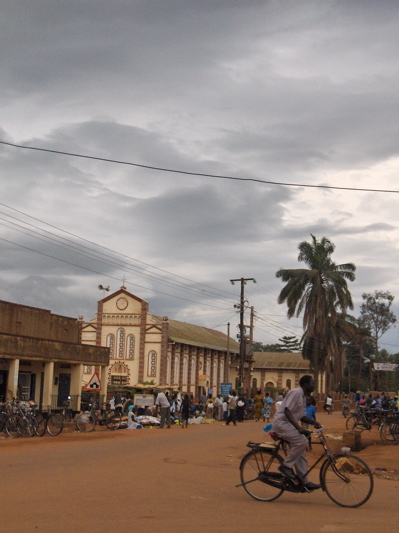
I’ve found it surprisingly challenging to reconcile hope with critical thinking about current events. I told Ben earlier in the week (on our date night, which we do every week and it’s so great!) that I was having this struggle and as we talked about the dynamic of hope the thought occurred to us that perhaps it was so hard to reconcile the desire not to blindly wait for something that was not going to happen and not giving up on it because we had a wrong view of hope. Maybe hope isn’t convincing yourself to think that something good is actually the most probable outcome, but believing that it should happen and that the good thing you hope for is closer to what God intended—closer to original design. With this little shift in my thinking it’s been easier to reconcile my mind and heart while I achingly long for peace in Uganda and reason through the complexity of the ongoing peace process. People want it so much, I want it so much. The emotional investment in this process is deep. You can see it on people’s faces. After 20 years, God, let this be the end—if not now when? When you talk to most people and ask them about what they think about the process the answers are on the tip of every tongue “I just want to go home,” or “I just want my sister to come back from the bush, that’s all I want.” I’m often humbled and baffled by the unflinching hope that many in the north express—but I do wonder, everyone has their breaking point, if this process fails will they reach it?
I spent most of this week with a delegation from MCCs advocacy offices from DC, Ottawa, and the UN office in New York as well as from the Africa and Peace departments in Akron. It was refreshing to be with them, to experience Uganda with them, and to discuss how we can better support the peace process through advocacy. We had a series of meetings with people from the groups of cultural and religious leaders who have been supporting/observing, military, NGO community, people in IDP camps, people on the monitoring team for the cessation of hostilities agreement, observers of the process from Juba, and others. The views they had, the messages they wanted to send were diverse, and rather than give my own ideas I thought I’d capture a few from what I heard: (paraphrased)
Why is the international community silent? The West is too silent, not showing oneness with Africa. If this conflict was happening somewhere else there would have been more support from the US. (Religious leader)
The incidences of violence around Juba reported in the media are not UPDF and LRA. Most incidences that have taken place have been the result of misinformation. (Monitoring team member)
I think that the government is trying to save face and that the LRA are rebuilding. There is a lack of commitment to relieve the suffering of Acholi people on both sides. They need to build confidence: don’t discuss wounds, don’t praise yourself, the negotiation should include the suffering people because they are motivated to work for peace. Maybe the negotiating teams should visit a camp so that they can get motivated (community leader)
Are you really sure that peace and justice are friends? Who is the parent in this conflict? Parents take all the costs of their children’s misbehavior. Convince the ICC to bend the rules. (Community leader)
What’s needed for peace is restorative justice. This is not a tribal war but crimes against humanity by terrorists. The military method hasn’t succeeded for 20 years. This might work. It is the most hope we’ve had. In the past the LRA wouldn’t eat food provided by the government of Uganda. But now they are accepting food, so there is some trust. (Formerly abducted person)
We want a statement from the Secretary General of the United Nations not only Jan Egeland. Now the Secretary General is leaving, I hope the next one will at least say something. (Religious leader)
Why is Kony so difficult to capture? We have a saying in Acholi, a coward lives longer. But the fighters are there in the bush, for them this is about reorganization. The LRA negotiating team are people who have a power hangover and they are not fighters. They are waiting for it to fail and getting attention and money. If you think I’m lying time will tell. (Military)
Why is Kony so difficult to capture? Because he is surrounded by children. Children are his water. (Community leader)
When I met with Kony, he had 3 messages: 1. He is for peace. 2. Watch and witness who will spoil the process. 3. The suffering should stop and the war should end. He is willing to do Mato Oput (reconciliation ceremony, that means drinking bitter herb) with the community but is not sure how it could be done with the government, since the government is not a tribe. (religious leader)
What specific confidence building measures are needed? UN supportive statements and a visit from the Secretary General to Northern Uganda. The African Union to respond to the call to be on the monitoring team. “Tell off” the government of Uganda to withdraw all troops in Sudan. Media should send positive supportive messages. It should not be a hurried process—there is no hurry in Africa—we need community views and this takes time. LRA needs to listen to the community. Focus on the victims and the costs of more war. (group of cultural and religious leaders)
These all are not exact quotes, but they are the things I remember and scribbled down in my notebook while I listened to people. Someone said, knowledge speaks, and wisdom listens. Trying to be wise, I’m listening--to those who may have accurate information or may be confused and misinformed but who all have a reason behind their words. I have many questions, but one is at the forefront of my mind. In any negotiation, a party’s position is strengthened when their alternative to a negotiated agreement is good. Unfortunately, all the parties have pretty decent alternatives, which may be why we've seen so many walk-outs. As I see it, the degree to which those alternatives are weakened motivation to settle without violence will be strengthened. How do the Juba peace talks become the most attractive option, and how can the alternatives to a negotiated agreement be minimized?
Tuesday, October 03, 2006
"Senseless" Continued: by Ben
I was perusing through our blog when Holly's entry of "Senseless" caught my eye. It was a story of an unfortunate event ending in the mob killing of a brother to our friend. It caught my eye today because I was in a village listening to people give stories of difficult life events and how they persevered through them. An old woman said, "My daughter was hit by a car and killed. When I heard the news I ran to the roadside and found a large mob beating the driver who hit my daughter to death. I broke through the mob and stood in protection of him saying, 'don't kill this man over what he has done to my daughter.' The mob released him. Later, when my clan members demanded that some kind of payment be made, I said, 'let him go, I have forgiven him.' My clan said that if the very mother of this girl can forgive, then we should also try to forgive."
I road a motorcycle down a long, winding, red dust road to find the parent support group meeting today. I sat with my heart in my throat as they "testified" one after the other, as to painful life experiences they have endured and the miraculous ways they have shown resilience.
I'm writing this blog for the sake of the great hope that exists here. Too often we see the looming evil, and remember it, instead of recognizing and remembering the ubiquitous goodness and strength in humankind.
I road a motorcycle down a long, winding, red dust road to find the parent support group meeting today. I sat with my heart in my throat as they "testified" one after the other, as to painful life experiences they have endured and the miraculous ways they have shown resilience.
I'm writing this blog for the sake of the great hope that exists here. Too often we see the looming evil, and remember it, instead of recognizing and remembering the ubiquitous goodness and strength in humankind.
Tuesday, September 12, 2006
Senseless
I hesitate to write this blog because there are no words. Words are inadequate substitutes for the pain. They can’t describe the depth to which humanity has strayed from our design. I haven’t yet assigned any rational thought to what has deeply stirred me. I don’t know if I will either. It is somewhat freeing not to have to name the emotion. To release the need to make sense of it all. It just doesn’t make any sense.
This past week I went with Tina to Kitgum training a group on conflict transformation. My co-trainer and good friend Anthony was with us. He got a phone call just before breakfast that shattered us. His cousin-brother was driving home to Gulu from Kampala and two kids who were playing ran into the street in front of him. He hit them and they died. Knowing that mob violence is common, it is advisable to go to the police rather than stop if something like that happens. But his cousin decided to go back and apologize toe the family of the children. A mob formed, armed with machetes and hoes. They killed him. Mercilessly and brutally, a death that I don’t even want to describe it was so gruesome and unimaginable. He was 24. The father of the children led the mob. The lack of mercy is confounding. Was it this war that desensitized them to violence that allowed normal human beings to mutilate a young man who’s worst sin might have been speeding? Does it make them feel better? Does the grieved father sleep more soundly knowing that he caused another father and mother to lose their son? That two families are now bereaved instead of one? I just can’t understand and it continues to sicken and disturb my core.
This past week I went with Tina to Kitgum training a group on conflict transformation. My co-trainer and good friend Anthony was with us. He got a phone call just before breakfast that shattered us. His cousin-brother was driving home to Gulu from Kampala and two kids who were playing ran into the street in front of him. He hit them and they died. Knowing that mob violence is common, it is advisable to go to the police rather than stop if something like that happens. But his cousin decided to go back and apologize toe the family of the children. A mob formed, armed with machetes and hoes. They killed him. Mercilessly and brutally, a death that I don’t even want to describe it was so gruesome and unimaginable. He was 24. The father of the children led the mob. The lack of mercy is confounding. Was it this war that desensitized them to violence that allowed normal human beings to mutilate a young man who’s worst sin might have been speeding? Does it make them feel better? Does the grieved father sleep more soundly knowing that he caused another father and mother to lose their son? That two families are now bereaved instead of one? I just can’t understand and it continues to sicken and disturb my core.
Monday, February 27, 2006
The Proof, The Trick & Restorative Justice
by Holly
Over a mug of coffee this morning I read the Sunday paper of one of the two most prominent Ugandan newspapers. The article that caught my attention was discussing how the political opposition uses the ongoing war to cast a shadow on the incumbent’s track record while addressing crowds of supporters in the North. It was an op-ed piece that was sharply criticizing the practice and setting the record straight: those who are responsible for the war are the LRA rebels—not the current government. The proof, the journalist opined, is that the International Criminal Court(ICC) has issued warrants for the top 5 in LRA command. I’ve been meaning to write a few thoughts about the hotly debated role of the ICC in Northern Uganda and this article is an excellent example of one of the many (unintended) byproducts of the international community’s attempt to administer justice. While I hold my own opinions on ICC involvement it seems most appropriate to focus on the perception and desires of those who are directly affected by it—the people in the North. While I can’t claim to speak for them, in my limited time here my conversations with colleagues, formerly abducted children, parents, camp leaders, religious leaders, and others have confirmed without exception empirical research that has been conducted that I’d read. (Justice & Peace Commission and Refugee Law Project are two main organizations). Three main beliefs about the ICC are reoccurring themes in conversations and research on the subject.
It is not seen to be objective. The case was referred to the court by the government of Uganda and by indicting only the top 5 in command of the LRA the perception (whether it is valid or not may be another story) is that the ICC has “chosen sides” in an ongoing conflict. Although virtually no one supports the LRA, many in the North don’t support the current government either and have been victims of human rights abuses committed by both warring parties. Most people believe that if there is to be accountability for injustices it should be comprehensive. The ICC has made statements indicating that the government would not be exempt from investigation. However, they only indicted top LRA and those statements seem to have only been read by a rare few who relish sifting through reports and not by your average (often illiterate) camp resident in Northern Uganda.
It undermines amnesty and therefore, many believe, the only shot at achieving sustainable peace. The government’s attitude towards the amnesty process is widely perceived to be at best ambiguous and at worst a trick to lure rebels out of the bush and then when peace is achieved to use the documentation of amnesty recipients as incriminating evidence to prosecute them—letting a thousand flowers bloom Ugandan style. In a strictly legal sense, if I understand it properly, it truly only undermines the amnesty of five individuals, however, it is NOT understood properly by the general population and even less so by those (children) who remain in the bush afraid of what will happen to them if they try to come out. The risks of escape are great. The stigmatization experienced while trying to reunite with a community and a family plagued with grievance is inevitable. The perceived liklihood of being prosecuted for crimes committed involuntarily does not provide the assurance that many need to even begin contemplation of surmounting the other hardships. Couple that with the fact that many of those trying to decide if they should risk escape and apply for amnesty are or were children when they were abducted and have undergone significant “mental conditioning” since then. The ICC has said that it would consider postponing the case “in the interests of justice.” If even one child is dissuaded from coming home to his/her family by confusion over the ICC is that in the interests of justice?
It imposes a western version of justice ignoring both the traditional way as well as the needs of the victims. Someone recently told me that they don’t want Kony sent to the Hague and then shipped to some comfortable jail somewhere. Nor do they want him tried by Ugandan courts where capitol punishment (by hanging) would be his likely sentence. No, they don’t want his blood on their hands, they want him to spend his life working in the fields. He should have to plow and sweat just like the rest of Northern Ugandans. While this scenario might not sound viable it reflects a widely held belief and practice of reintegrating perpetrators into their communities. If the victims do not believe the ICC is achieving justice—than who is the justice for? Does it only satisfy the international community’s desire to do something? It pours some water on our burning consciences as each day we continue to fail to effectively respond to the growing suffering of the people of Northern Uganda. While the crimes that the ICC deals with are those against humanity—we must not neglect the fact that the victims of those crimes have faces and names and many of them are still alive and thinking about their futures. One mother told me that there could be no meaningful restitution for what she has suffered—the injury is too great. For her, justice means that her daughter and the children that she bore in captivity receive the best possible education. Justice for Northern Uganda, will not be achieved by 5 arrest warrants. It will need to move beyond retributive and punitive justice and draw from the deep traditional well that the people of Northern Uganda have used for centuries—of restorative justice.
Over a mug of coffee this morning I read the Sunday paper of one of the two most prominent Ugandan newspapers. The article that caught my attention was discussing how the political opposition uses the ongoing war to cast a shadow on the incumbent’s track record while addressing crowds of supporters in the North. It was an op-ed piece that was sharply criticizing the practice and setting the record straight: those who are responsible for the war are the LRA rebels—not the current government. The proof, the journalist opined, is that the International Criminal Court(ICC) has issued warrants for the top 5 in LRA command. I’ve been meaning to write a few thoughts about the hotly debated role of the ICC in Northern Uganda and this article is an excellent example of one of the many (unintended) byproducts of the international community’s attempt to administer justice. While I hold my own opinions on ICC involvement it seems most appropriate to focus on the perception and desires of those who are directly affected by it—the people in the North. While I can’t claim to speak for them, in my limited time here my conversations with colleagues, formerly abducted children, parents, camp leaders, religious leaders, and others have confirmed without exception empirical research that has been conducted that I’d read. (Justice & Peace Commission and Refugee Law Project are two main organizations). Three main beliefs about the ICC are reoccurring themes in conversations and research on the subject.
It is not seen to be objective. The case was referred to the court by the government of Uganda and by indicting only the top 5 in command of the LRA the perception (whether it is valid or not may be another story) is that the ICC has “chosen sides” in an ongoing conflict. Although virtually no one supports the LRA, many in the North don’t support the current government either and have been victims of human rights abuses committed by both warring parties. Most people believe that if there is to be accountability for injustices it should be comprehensive. The ICC has made statements indicating that the government would not be exempt from investigation. However, they only indicted top LRA and those statements seem to have only been read by a rare few who relish sifting through reports and not by your average (often illiterate) camp resident in Northern Uganda.
It undermines amnesty and therefore, many believe, the only shot at achieving sustainable peace. The government’s attitude towards the amnesty process is widely perceived to be at best ambiguous and at worst a trick to lure rebels out of the bush and then when peace is achieved to use the documentation of amnesty recipients as incriminating evidence to prosecute them—letting a thousand flowers bloom Ugandan style. In a strictly legal sense, if I understand it properly, it truly only undermines the amnesty of five individuals, however, it is NOT understood properly by the general population and even less so by those (children) who remain in the bush afraid of what will happen to them if they try to come out. The risks of escape are great. The stigmatization experienced while trying to reunite with a community and a family plagued with grievance is inevitable. The perceived liklihood of being prosecuted for crimes committed involuntarily does not provide the assurance that many need to even begin contemplation of surmounting the other hardships. Couple that with the fact that many of those trying to decide if they should risk escape and apply for amnesty are or were children when they were abducted and have undergone significant “mental conditioning” since then. The ICC has said that it would consider postponing the case “in the interests of justice.” If even one child is dissuaded from coming home to his/her family by confusion over the ICC is that in the interests of justice?
It imposes a western version of justice ignoring both the traditional way as well as the needs of the victims. Someone recently told me that they don’t want Kony sent to the Hague and then shipped to some comfortable jail somewhere. Nor do they want him tried by Ugandan courts where capitol punishment (by hanging) would be his likely sentence. No, they don’t want his blood on their hands, they want him to spend his life working in the fields. He should have to plow and sweat just like the rest of Northern Ugandans. While this scenario might not sound viable it reflects a widely held belief and practice of reintegrating perpetrators into their communities. If the victims do not believe the ICC is achieving justice—than who is the justice for? Does it only satisfy the international community’s desire to do something? It pours some water on our burning consciences as each day we continue to fail to effectively respond to the growing suffering of the people of Northern Uganda. While the crimes that the ICC deals with are those against humanity—we must not neglect the fact that the victims of those crimes have faces and names and many of them are still alive and thinking about their futures. One mother told me that there could be no meaningful restitution for what she has suffered—the injury is too great. For her, justice means that her daughter and the children that she bore in captivity receive the best possible education. Justice for Northern Uganda, will not be achieved by 5 arrest warrants. It will need to move beyond retributive and punitive justice and draw from the deep traditional well that the people of Northern Uganda have used for centuries—of restorative justice.
Subscribe to:
Posts (Atom)